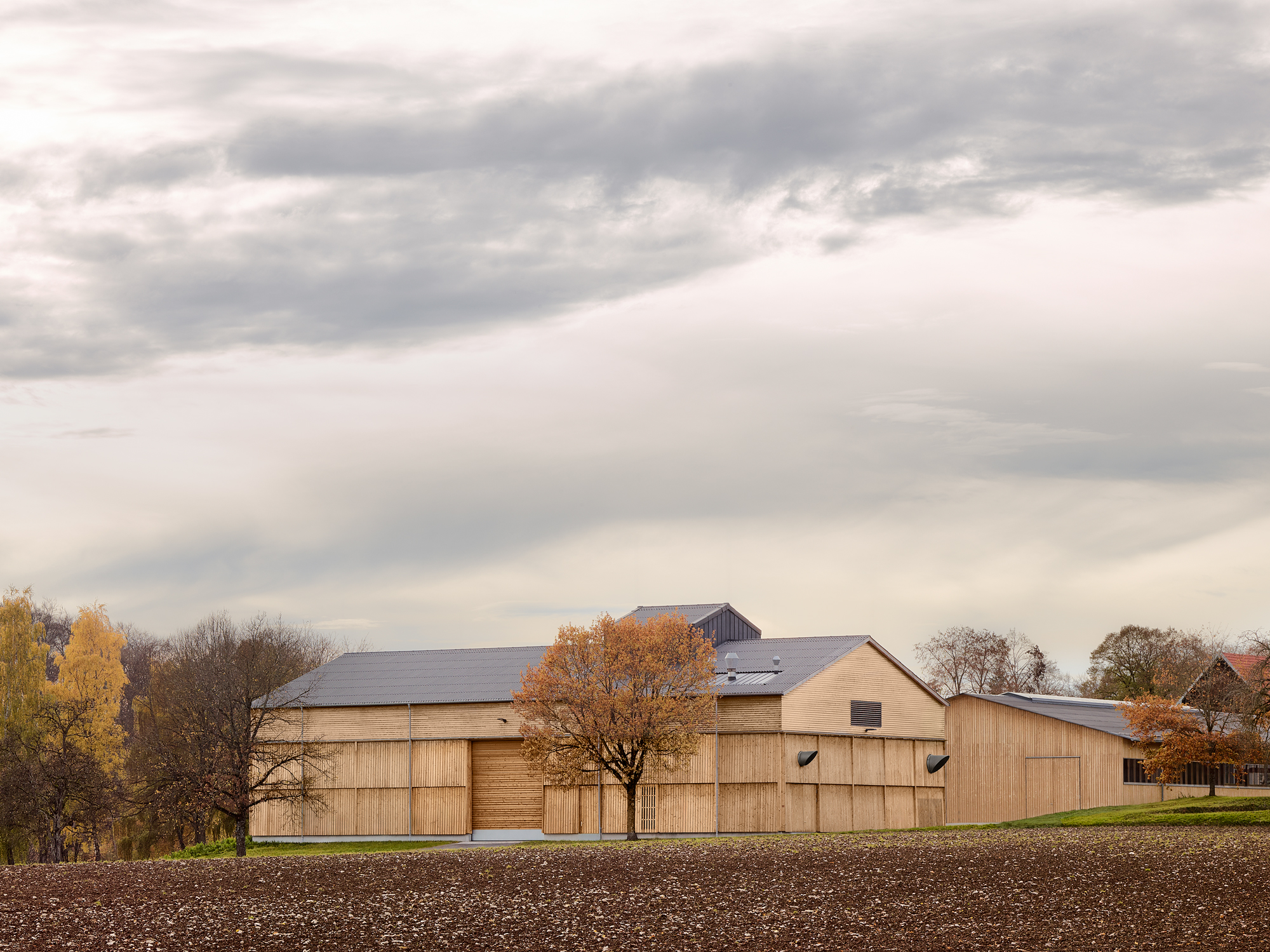

The new grain store at the Marbach State Stud’s site in St. Johann exemplifies the essence of contemporary agricultural construction: a clear attitude, simple means, meticulous execution and a high degree of technical sophistication. The result we developed is a hall that translates technical complexity into precise, calm architecture. Concrete and timber interlock – functional, robust and consciously proportioned. The building blends effortlessly into both its agricultural use and the landscape of the Swabian Alb.
A place with history
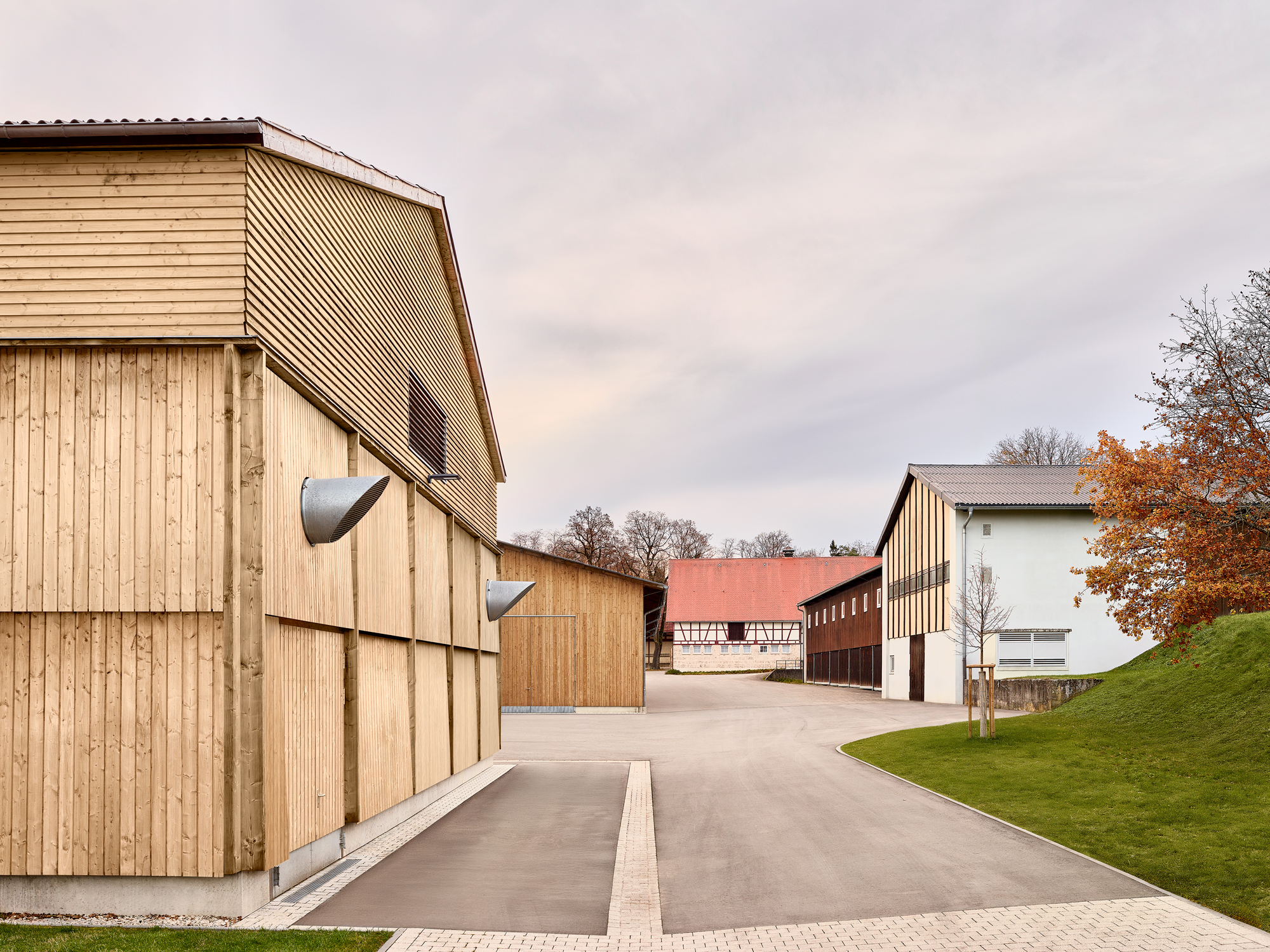
Situated on the open Alb plateau between Eningen unter Achalm and St. Johann-Würtingen, the St. Johann stud farm comprises around 14 buildings spanning four centuries – residential and utility buildings, a riding hall, stables – together forming a listed ensemble that is part of the long-established Marbach State Stud.
Following the fire that destroyed the historical grain barn in 2017, the new building became both a necessary and symbolic step. It represents the evolution of agricultural practices and the ambition to combine functional processes with architectural design.
Planning with precision
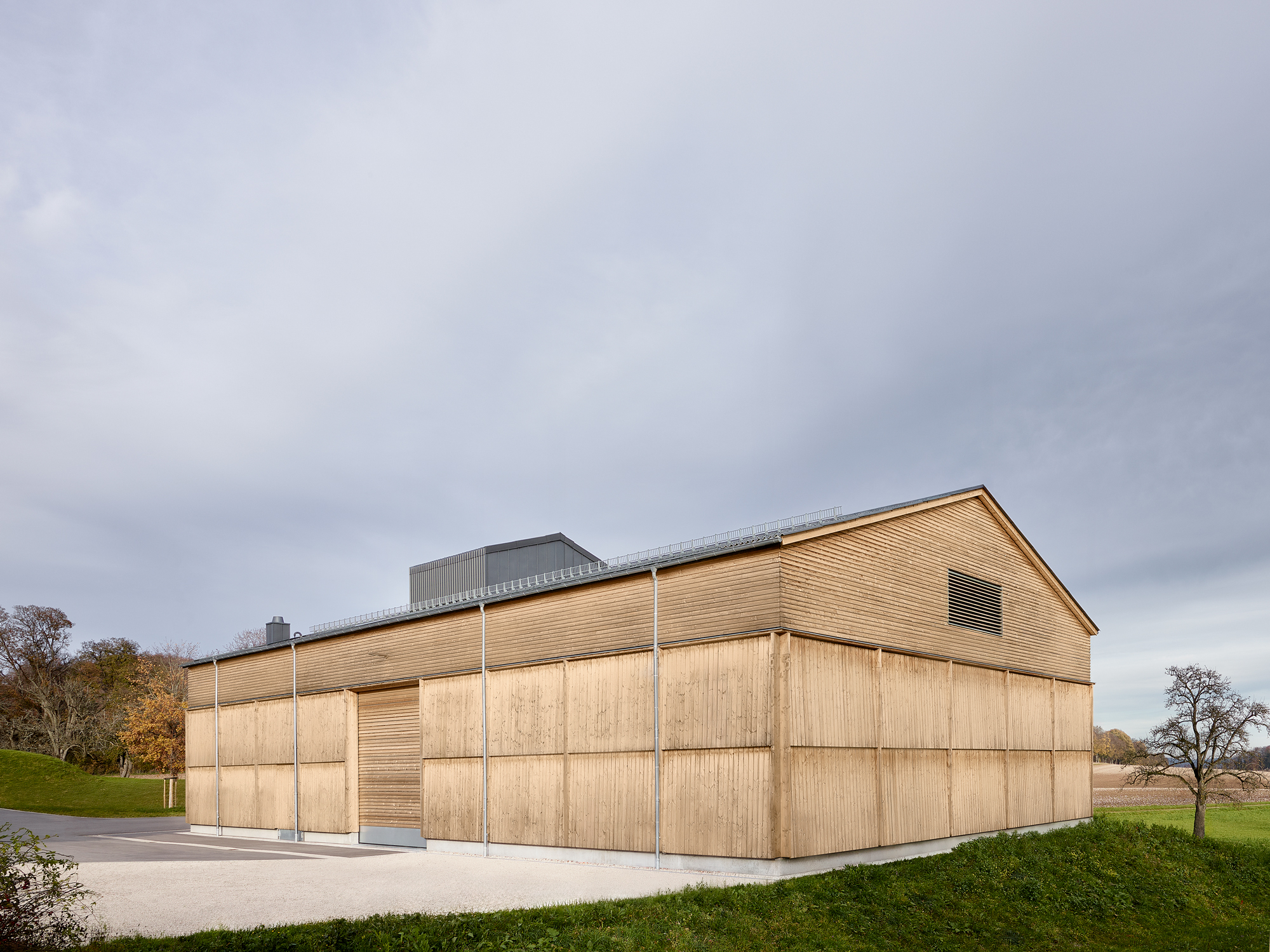
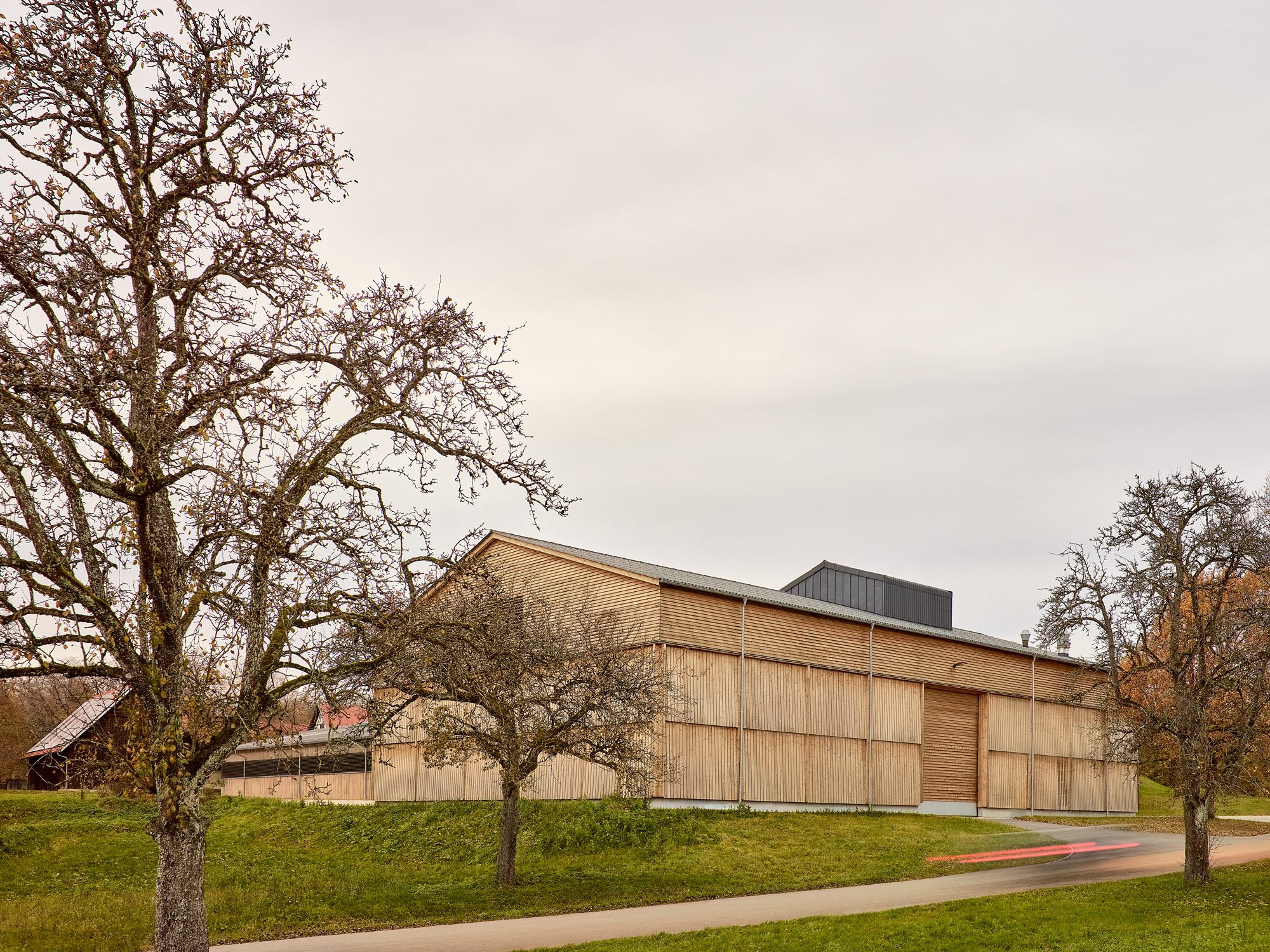
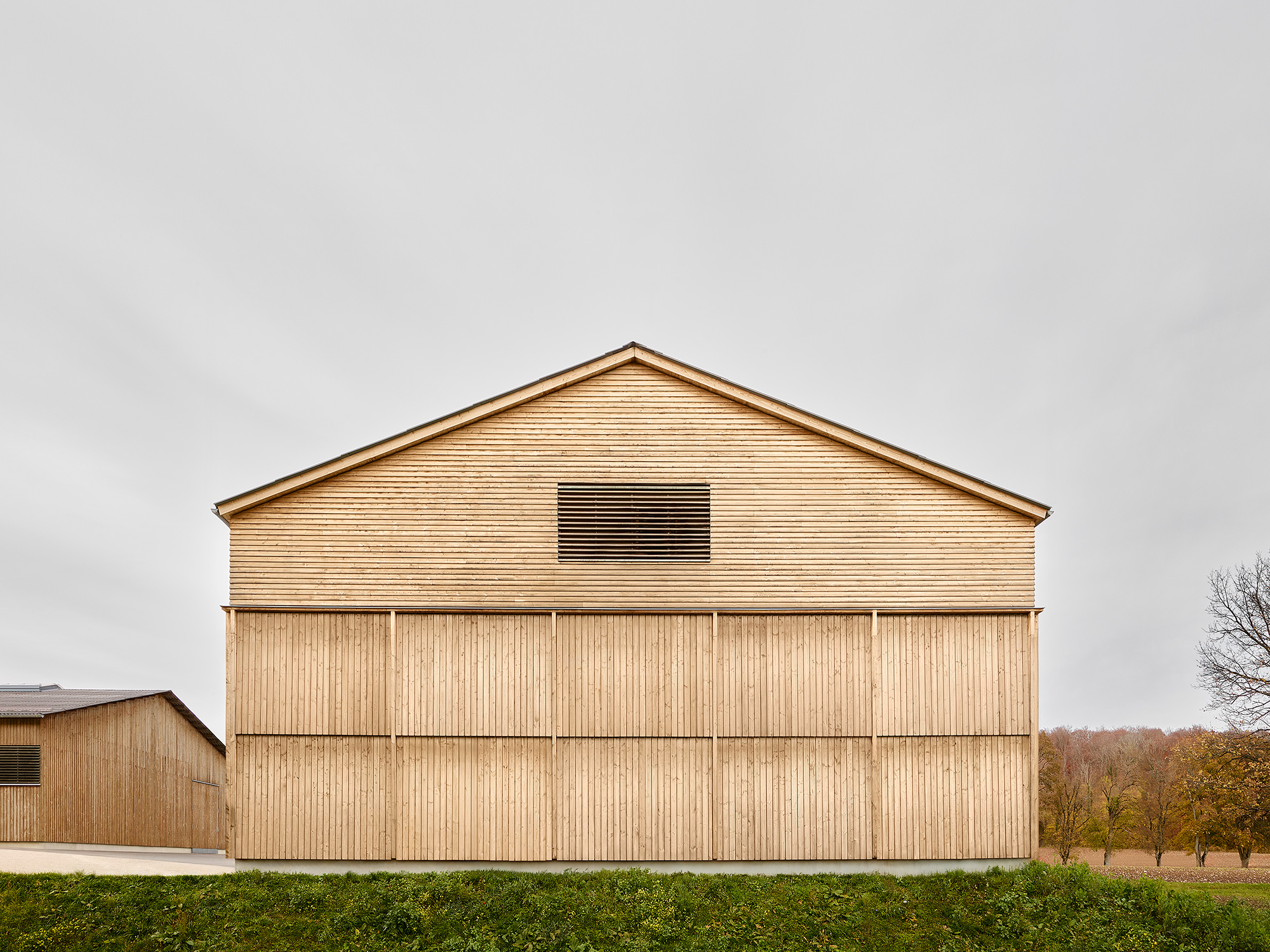
The hall is aligned parallel to the estate’s main access road and measures 37 metres in length, 21 metres in width and just under 12 metres to the ridge. Its northern façade is slightly recessed in relation to the riding hall, which we completed in 2011, creating a small forecourt that opens the courtyard as a prelude to the rest of the buildings.
The building follows a clear functional structure. The access axis runs down the middle of the long side and includes the intake point – a 14-metre-long sloped concrete pathway, partly covered with grating, known as the “Gosse”. Tractors enter from the east, unload grain and exit on the west side – a seamless process. Underneath the “Gosse” is the partial basement housing the grain conveyor technology. From here, a bucket elevator lifts the grain vertically into the “lantern” – a narrow structure that sits atop the ridge like a technical spine. From there, a system of conveyors distributes the grain and other crops, after intensive dedusting and cleaning, into various silos and storage boxes.
Space and machine
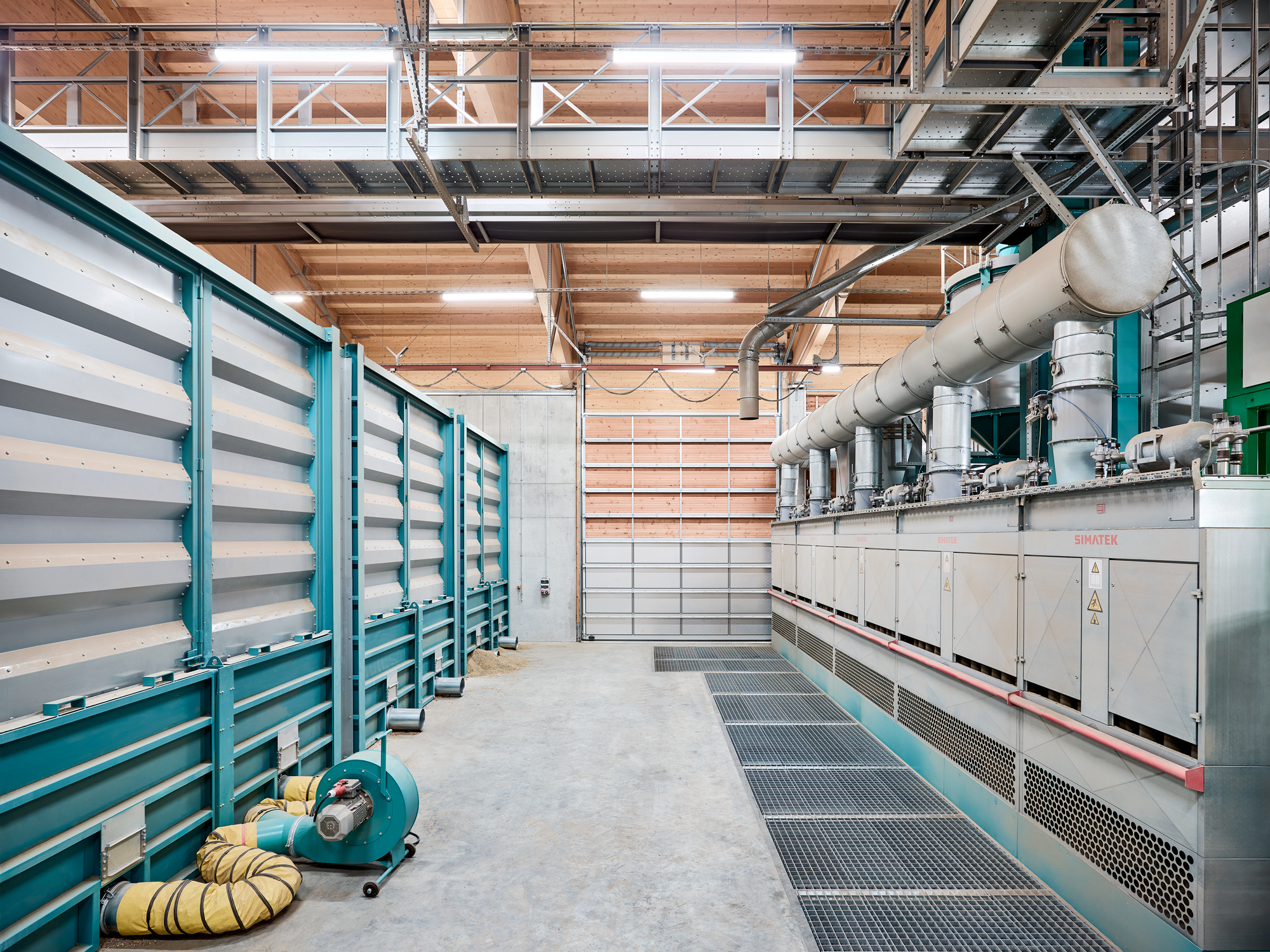
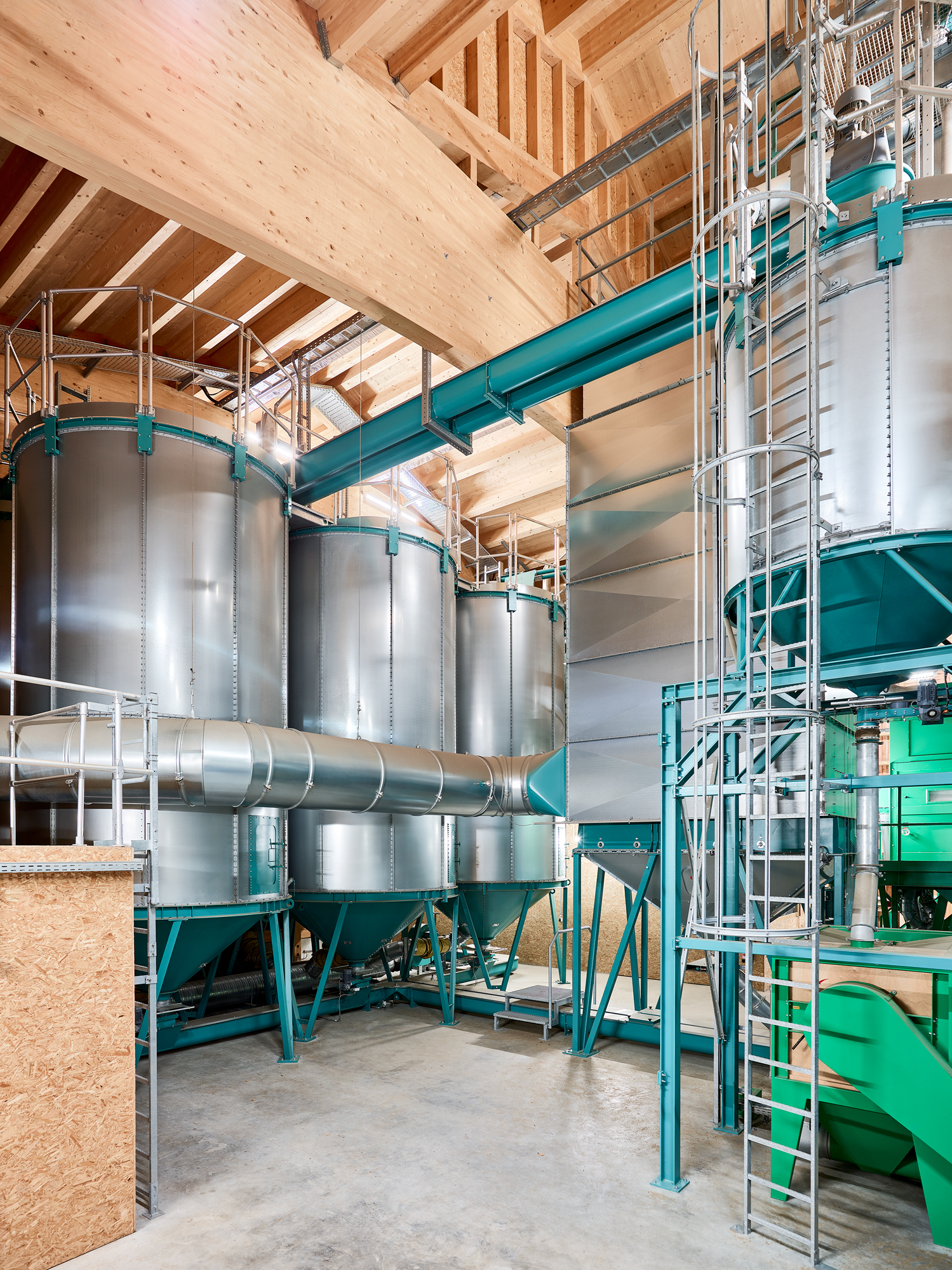
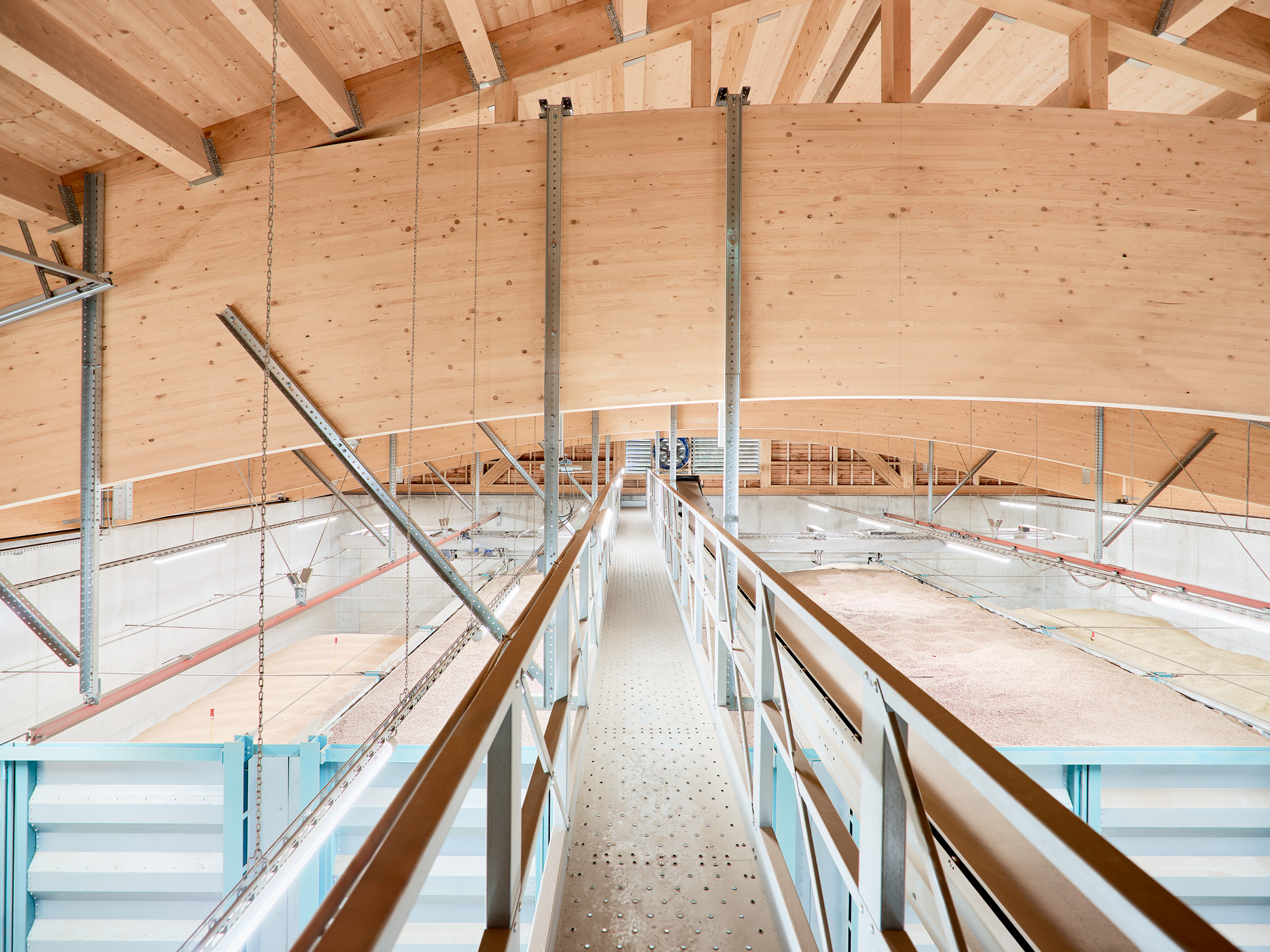
The building’s interior is dictated by the logic of the process. Four large storage boxes made of trapezoidal sheet metal each hold up to 200 tonnes of grain. Six silos accommodate smaller quantities of grain, legumes or feed pellets. A dust chamber, a boiler room and the control centre at the northern end of the hall complete the room schedule. The latter is the heart of the facility: a state-of-the-art control centre from which every process – from cleaning and drying to storage – is digitally managed. Here, everything is measured, regulated and monitored, while on the other side of a window the machinery is in operation: brushing machines, filters, dust-extraction panels, conveyor belts.
Structure and material
We opted for a hybrid structure of reinforced concrete and timber – economical, durable and ecologically sound. A solid, power-trowelled concrete trough supports the loads of the stored grain, while timber hinged columns and concrete columns together provide bracing for the structure. The façade consists of prefabricated, slightly inclined wall elements made from untreated Douglas fir. Over time, the wood will weather to a grey hue, as will the horizontal timber cladding of the roof area, blending in with the neighbouring buildings. The pitched roof is clad in fibre cement corrugated sheets and flush-integrated photovoltaic panels, forming a continuous surface. The materials used for the lantern continue the anthracite colour scheme – a precise interplay of technology and design.
In addition to structural considerations, lightning protection was a top priority: grain dust is highly explosive, which is why all metal components, roof structures and technical units were integrated into a continuous lightning protection and equipotential bonding system.
Simple construction, well executed
Agricultural construction is often seen as plain and utilitarian, rarely architecturally refined. But St. Johann proves otherwise. The grain store demonstrates how simplicity can be executed with precision when function and design go hand in hand. The construction of the building relies on few trades, familiar materials and a form that directly follows its function. Technological systems, fire protection and cost-effectiveness are all accommodated in a compact space, while the external appearance has been adapted to the listed historical buildings of the stud farm, into which the new grain store blends naturally – demonstrating how modern construction can respectfully integrate into an existing context. The result is a model for agriculture that takes responsibility and for architecture that finds quality in simplicity.