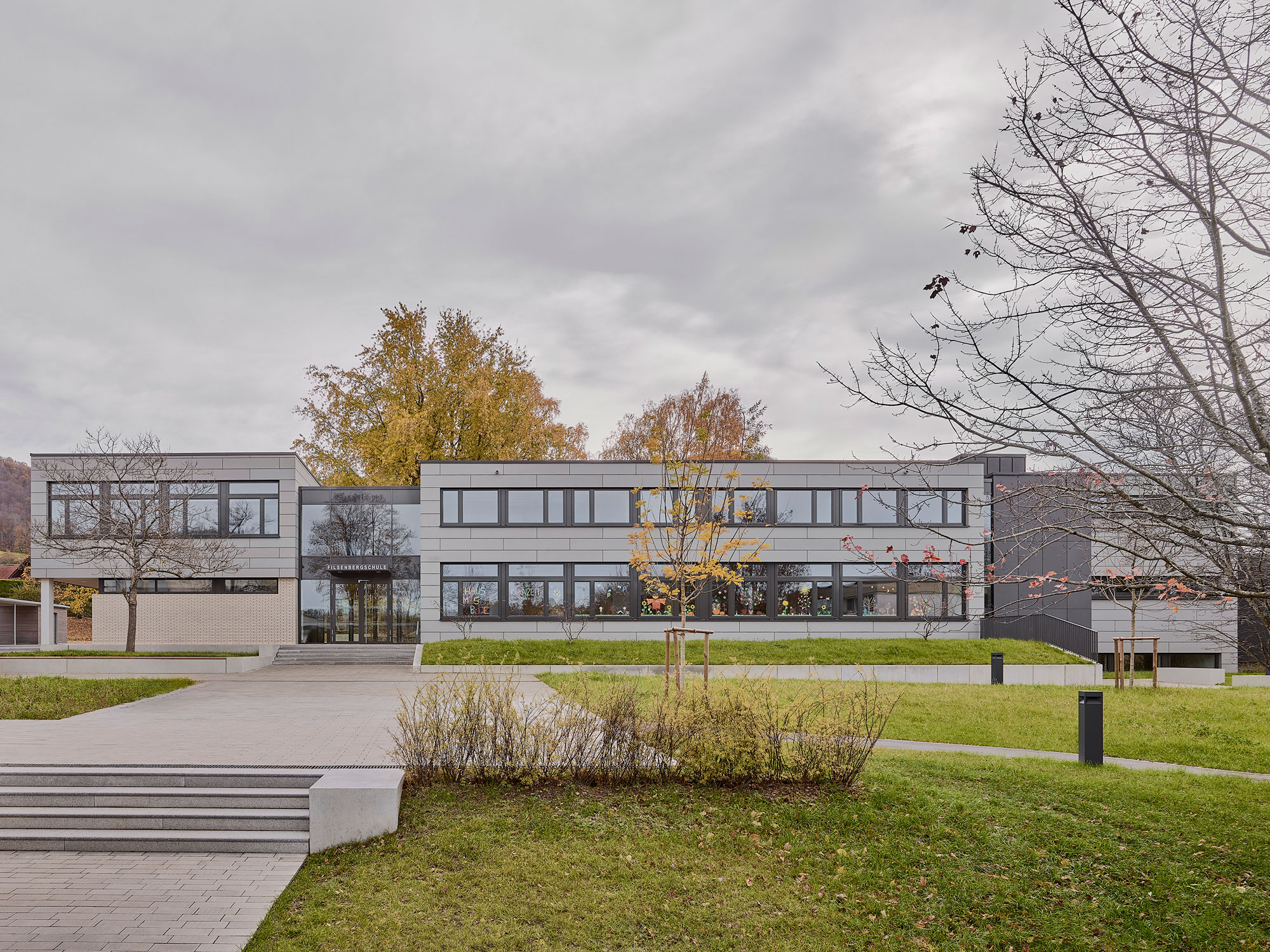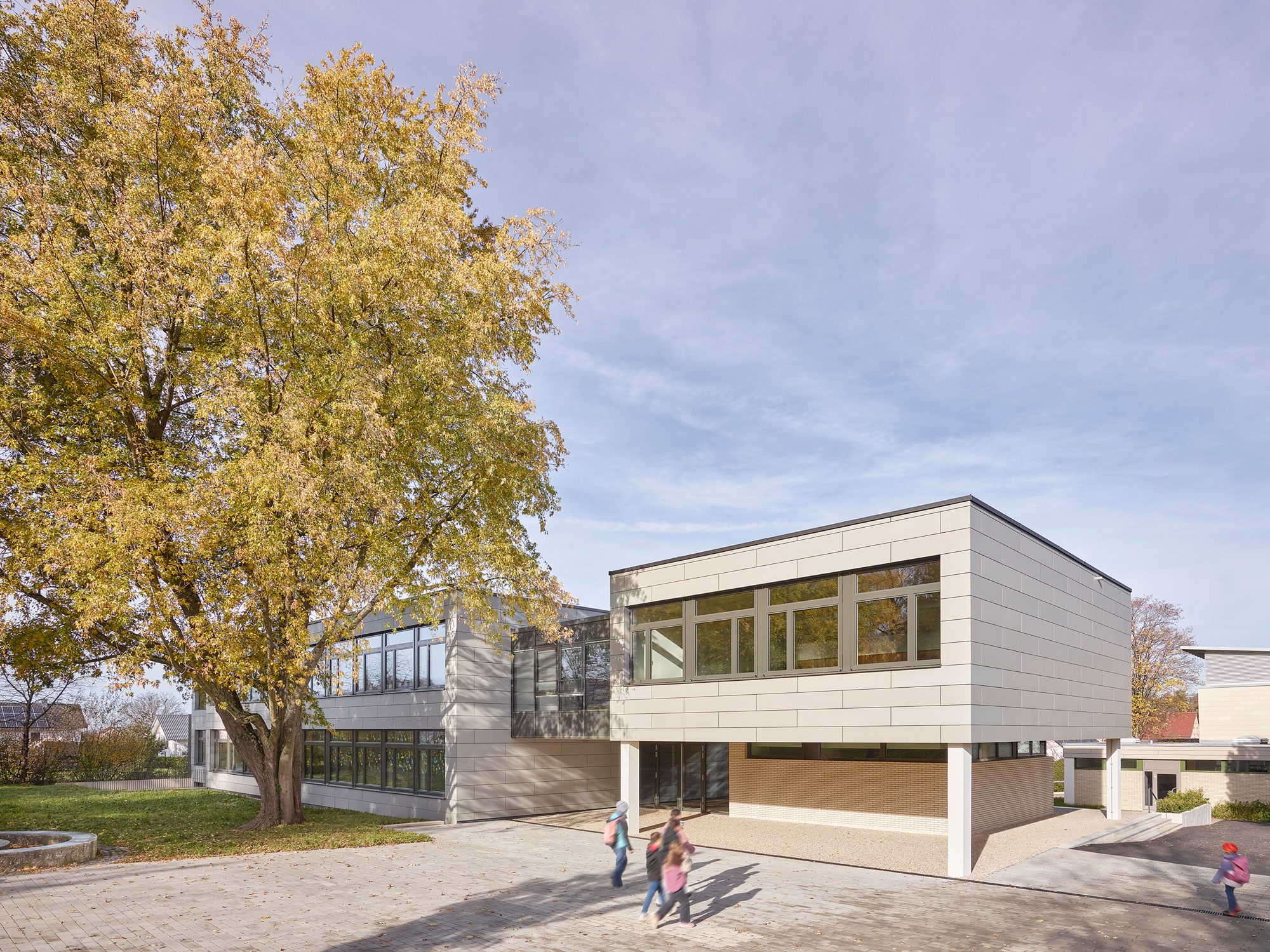

Anyone entering the Filsenberg School in Mössingen-Öschingen today does not encounter a staged display of the new, but an architecture that has been thoughtfully developed from the existing structure. We comprehensively refurbished the small single-stream primary school from 1965, restoring and reinforcing the building’s original character. New requirements in fire safety, accessibility, energy performance and everyday school life for around 100 children and their teachers were integrated into a building that retains its spatial generosity and clear organization.
The result is a school that develops its future from what already exists—an approach that is both architectural and ecological. What can be reused need not be newly produced. Preserving the existing structure saves resources, retains embodied energy, and limits intervention to what is necessary. The original complex, comprising three buildings—the school building, the sports and events hall, as well as the the janitor's building—remains recognizable as a unified ensemble. The new staircase with lift and the ventilation plant were inserted in a way that preserves the building’s original character. In refurbishment projects in particular, we see our task as recognizing and continuing the spatial, architectural and craftsmanship-related qualities of the existing building.
Connected to Its Site
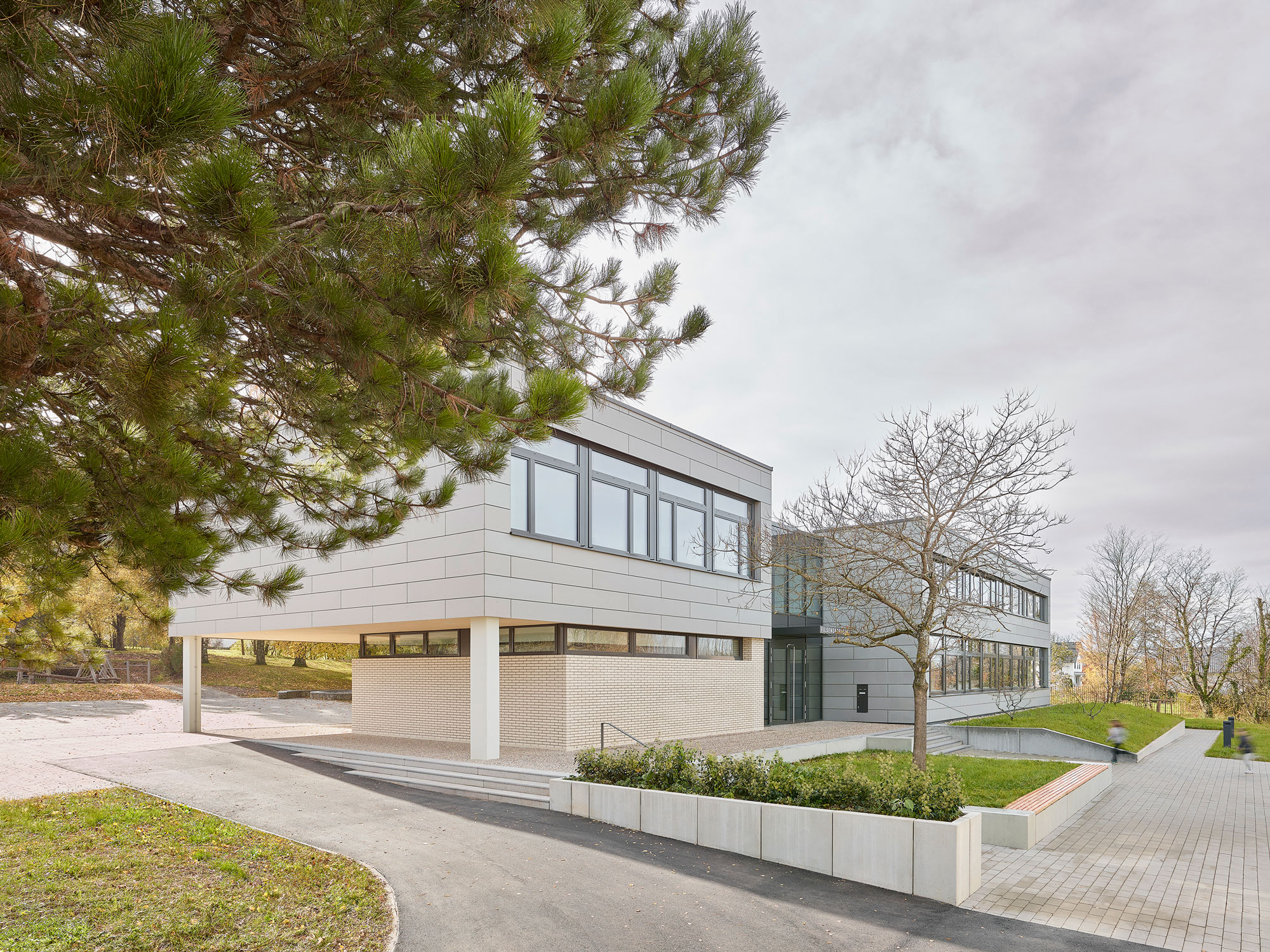
The Filsenberg School was originally completed as a primary and secondary school for the Mössingen-Öschingen district. It is located on the south-western edge of the town on gently north-sloping terrain, embedded in generous, park-like grounds with schoolyard, play areas, and sports facilities. For many families in Öschingen, the school is a familiar place, used over generations. Preserving its character throughout the refurbishment was therefore essential—ensuring it remains open, lively, and rooted in its park-like setting.
Careful Renewal
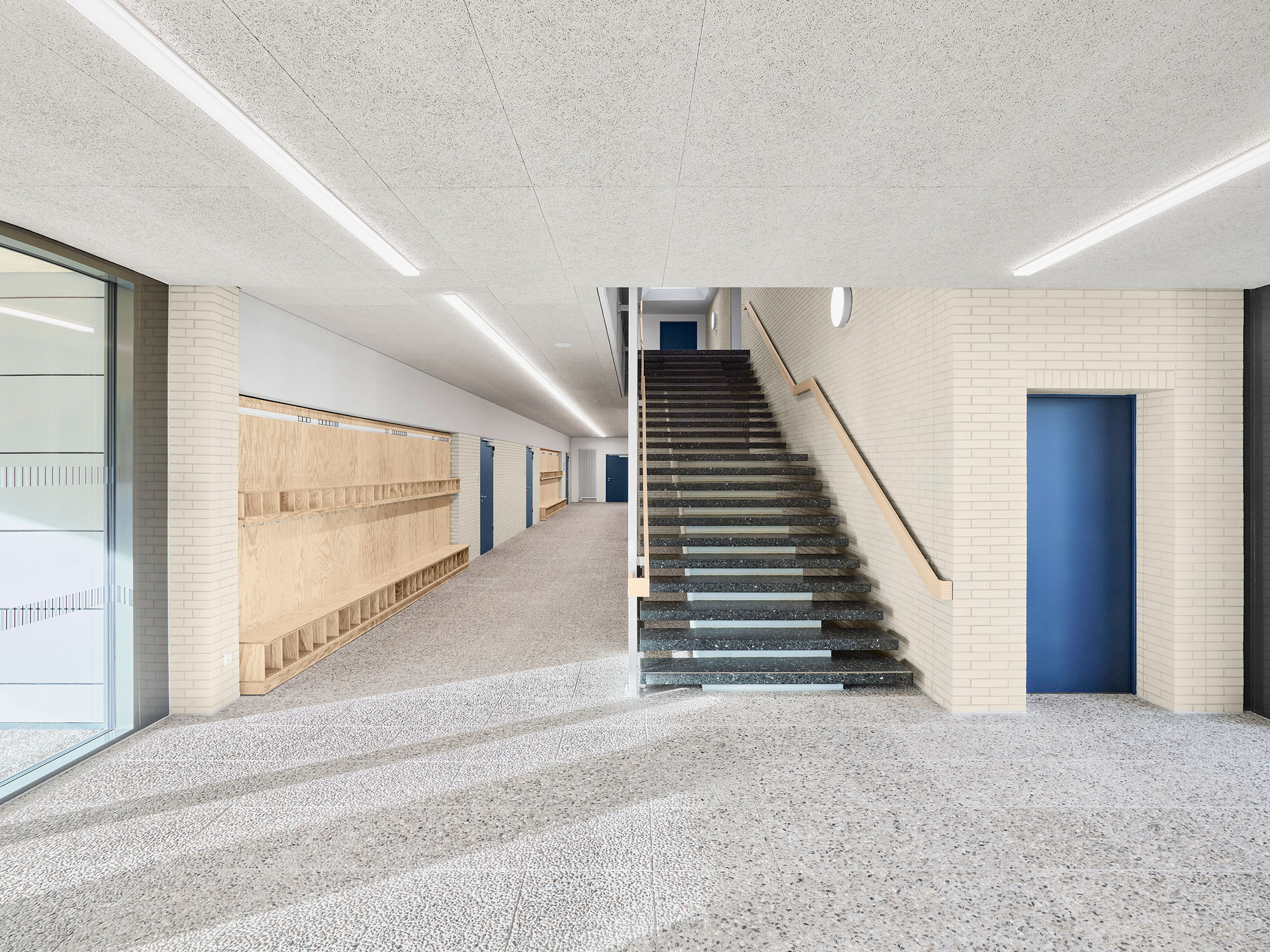
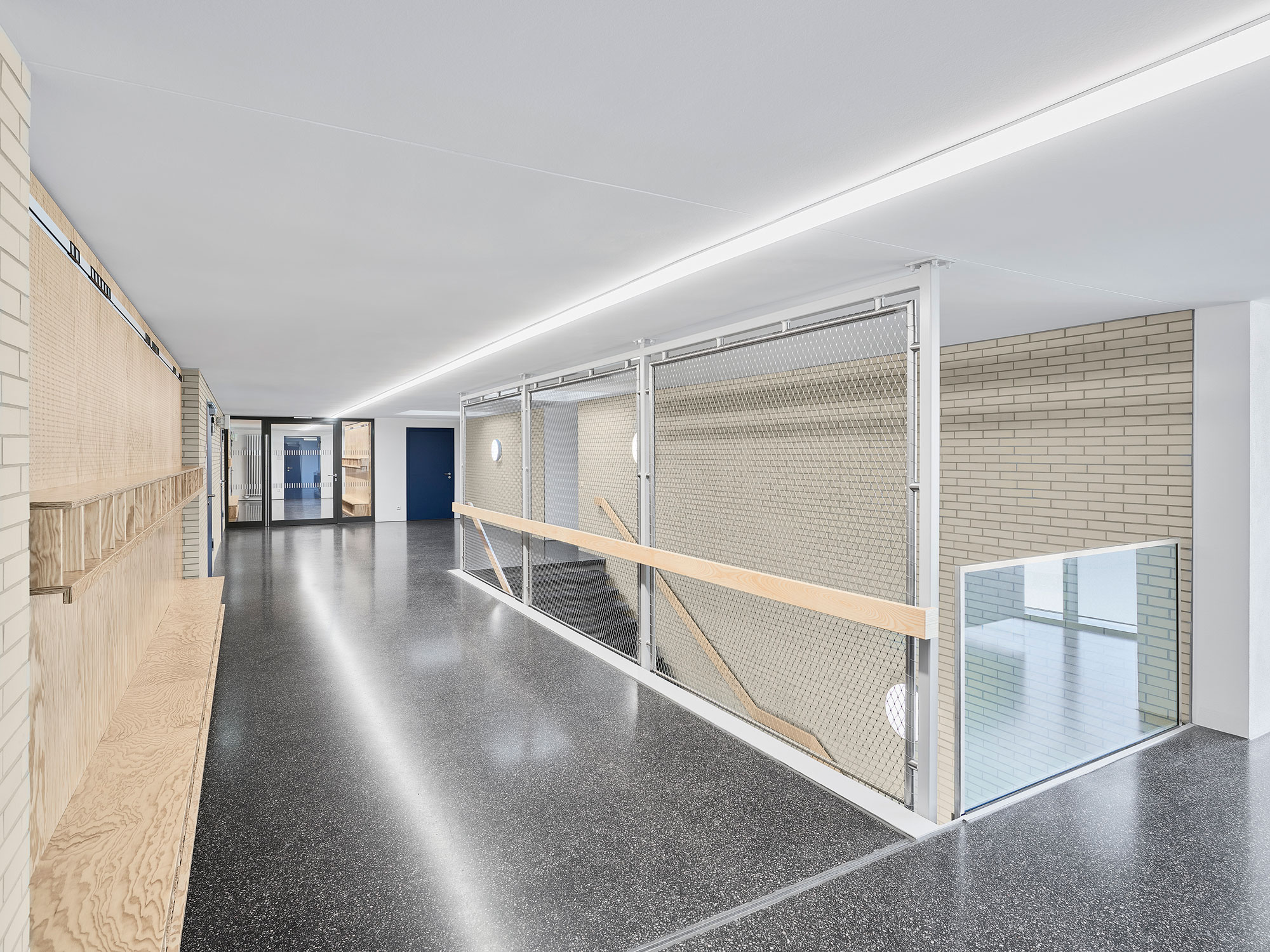
Prior to refurbishment, despite some alterations, the building largely remained in its original state. Fire protection required urgent upgrading, a second means of escape had to be created, and the building’s energy performance fundamentally improved. At the same time, it was clear that the value of the existing structure lay precisely in the building’s original architectural character. We therefore retained the basic floor plan structure as far as possible, including the generous circulation area with its central staircase. The large classrooms were also preserved and only adapted where required by modern school use.
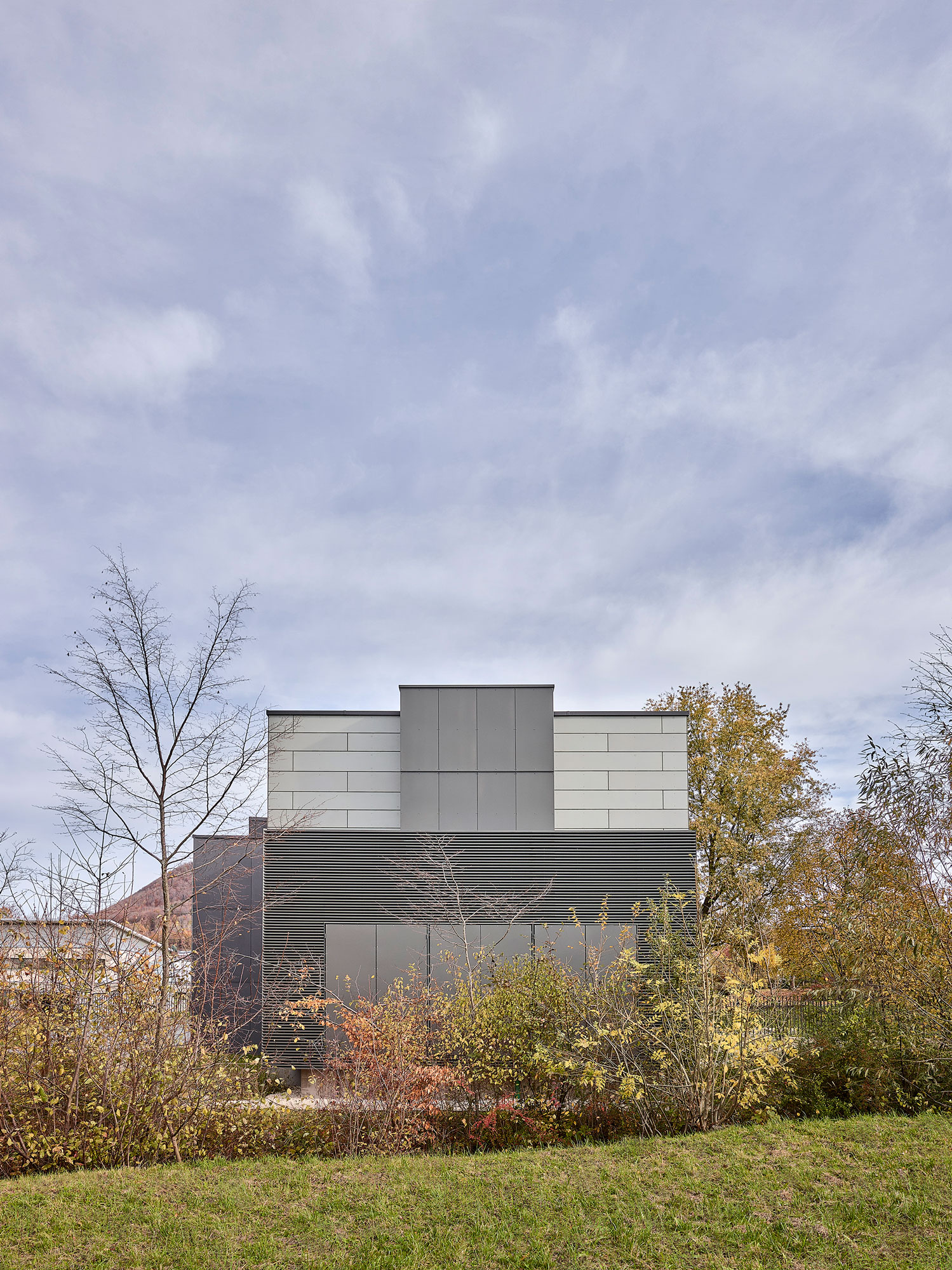
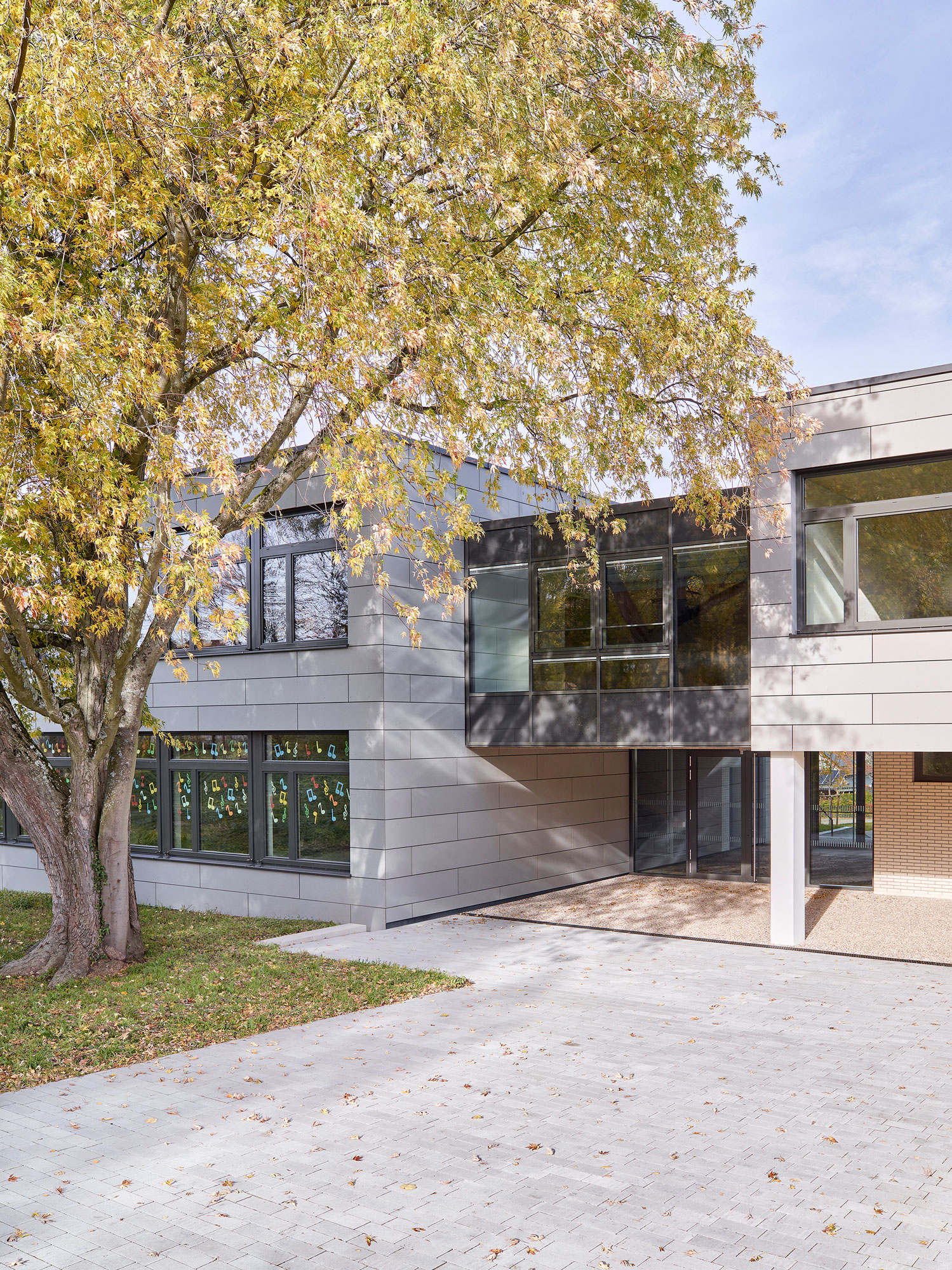
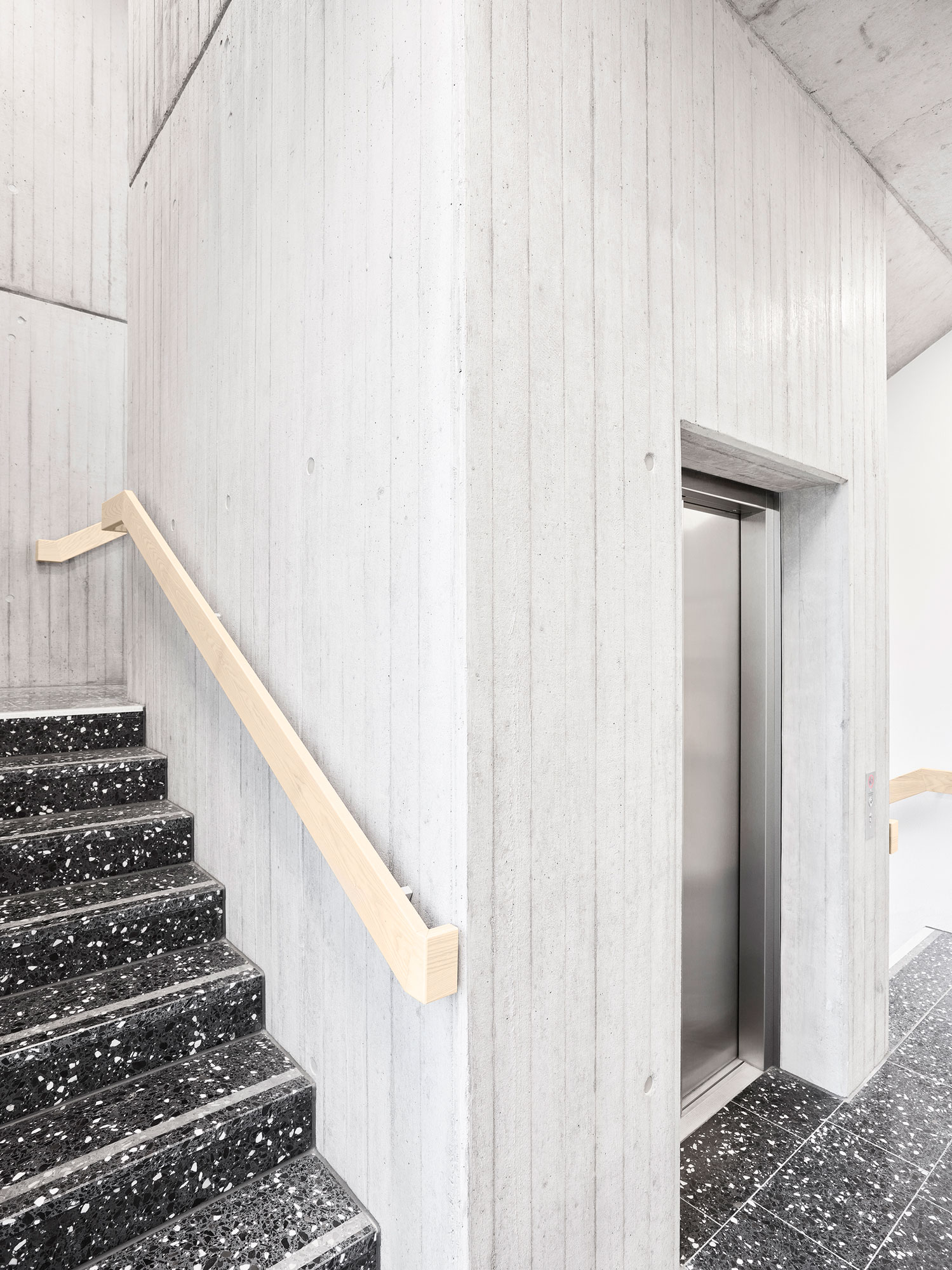
Additions to the structure were limited to where new requirements made them necessary. At the recessed north corner, a second staircase with lift was introduced, providing the required second escape route, enabling barrier-free access and connecting a craft room that had previously only been accessible from outside. The new ventilation plant was attached along the narrow west side, allowing teaching and sanitary areas to be ventilated centrally without unnecessary intervention through additional shafts and structural openings. Both additions are deliberately identifiable as new elements through their façades, yet integrate discreetly into the ensemble, preserving the building’s original character.
Space for Everyday Use
Inside, the school was further developed to support its daily use while remaining open to future developments. Each of the large classrooms now includes areas for smaller group work, which can be flexibly separated with movable furniture. On the ground floor, a former classroom has been converted into a teaching kitchen with an adjoining common area. The former educational kitchen was combined with adjacent rooms to create a generous area for core-time childcare, including pre-installed infrastructure for potential future meal service.
Access to the toilet facilities has been moved from the external area typical of the building’s era into the interior of the building, supplemented by an accessible toilet. Additional doors were inserted between classrooms to ensure that the new escape staircase can be reached safely from all rooms. This illustrates another quality of the refurbishment: the precision with which everyday processes have been reorganized.
Material with Memories
The project is particularly striking where material and memories converge. At Filsenberg School, many elements had survived in their original condition, including the characteristic exposed aggregate concrete flooring on the ground floor, which extends from exterior to interior. This feature was not only preserved but continued. Where additional slabs were required inside, we reused existing exterior slabs; outside, they were replaced with new exposed aggregate concrete slabs matching the original grain and production method. Yet the old slabs reveal something no new material can replicate: they are finer, smoother, and worn by decades of use by generations of pupils. In this way, the character of the building is preserved not as a museum piece, but through its continued use.
Accordingly, the main staircase, with its cast stone steps, and the window sills—also made of cast stone—were retained and, where necessary, supplemented in keeping with the existing design. New surfaces were selected in reference to the original materials. Robust, natural, and visible in their materiality: mastic asphalt flooring, acoustic ceilings made from lightweight wood wool panels, clinker brick slips in high-traffic hallway areas and around doors, exposed concrete with a board-like texture in the new stairwell as well as built-in furniture and wall panelling in maritime pine panels referencing the original wood fittings. New timber-aluminium windows in silver fir complete this material palette. The result feels coherent because it has been designed to fit in with the existing structure.
Cladding and Approach
The façades were completely renewed and fitted with a uniform ventilated façade of fibre cement panels with thermal insulation, partly reusing insulation added in earlier phases. As a double-layer exposed concrete façade closer to the building’s original appearance was not feasible for cost reasons, its character was reinterpreted through a light grey, horizontally structured cladding. This emphasizes the strong horizontal window bands and reinforces the tripartite composition of the complex. Only the new building elements recede slightly in a darker grey—the stairwell with larger vertical panels and the ventilation plant with a louvred aluminium cladding.
Technology That Takes a Back Seat
Behind the building’s calm appearance lies a comprehensive technical refurbishment. All building services installations were removed and replaced. Today, classrooms and sanitary areas are ventilated and deaerated via a central ventilation system with heat recovery. Newly installed radiators are connected to the existing wood pellet boiler located in the sports and events hall. Electrical systems and technical distribution were also reorganized.
Solar protection was likewise updated to meet contemporary requirements. Integrated behind the ventilated façade is a venetian blind system that provides reliable glare and heat protection, as required for teaching with digital media. The roof areas were upgraded with tapered insulation, extensive greening, and a full-coverage photovoltaic system.
School in the Park
Not only the building but also its surroundings were redesigned as part of the refurbishment. The external spaces around the school and hall were reorganized and significantly enhanced. Paths, stairs, and entrances were renewed, and access routes were reinforced and designed for deliveries and fire services. Between the school and the hall, a larger plaza was created that functions both for daily school use and for events. A smaller entrance space was formed in front of the new stairway extension.
The schoolyard on the south side was completely redesigned, while existing elements such as a large tree and the spiral bench were retained. Bicycle and equipment shelters, as well as a covered parking area for children’s vehicles, complement the ensemble.
The open spaces were also carefully developed in terms of resilience and sustainability. Rainwater is collected, retention areas manage heavy rainfall, and a fire water reservoir strengthens infrastructure beyond the school site. In this way, the project combines architectural renewal with functional resilience.