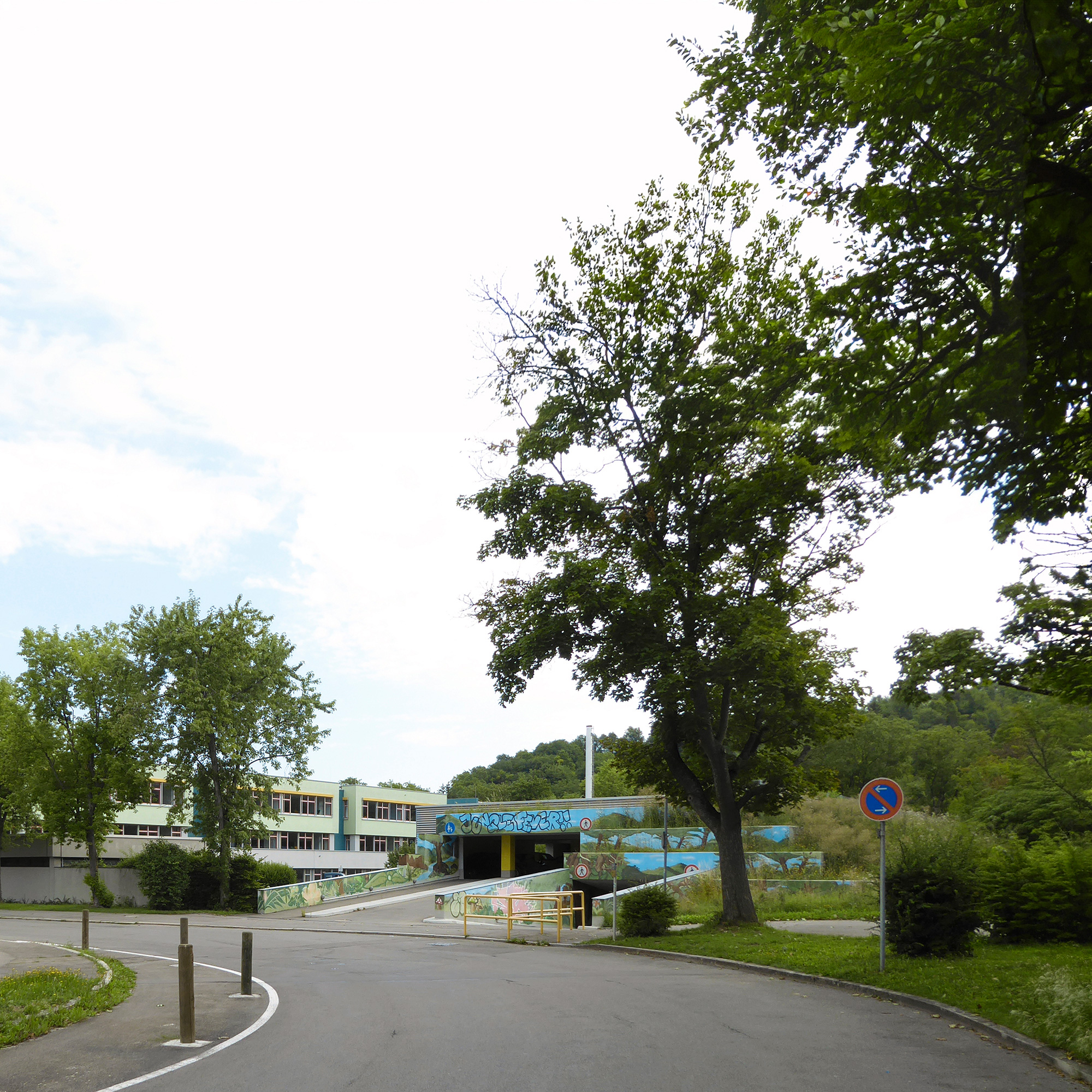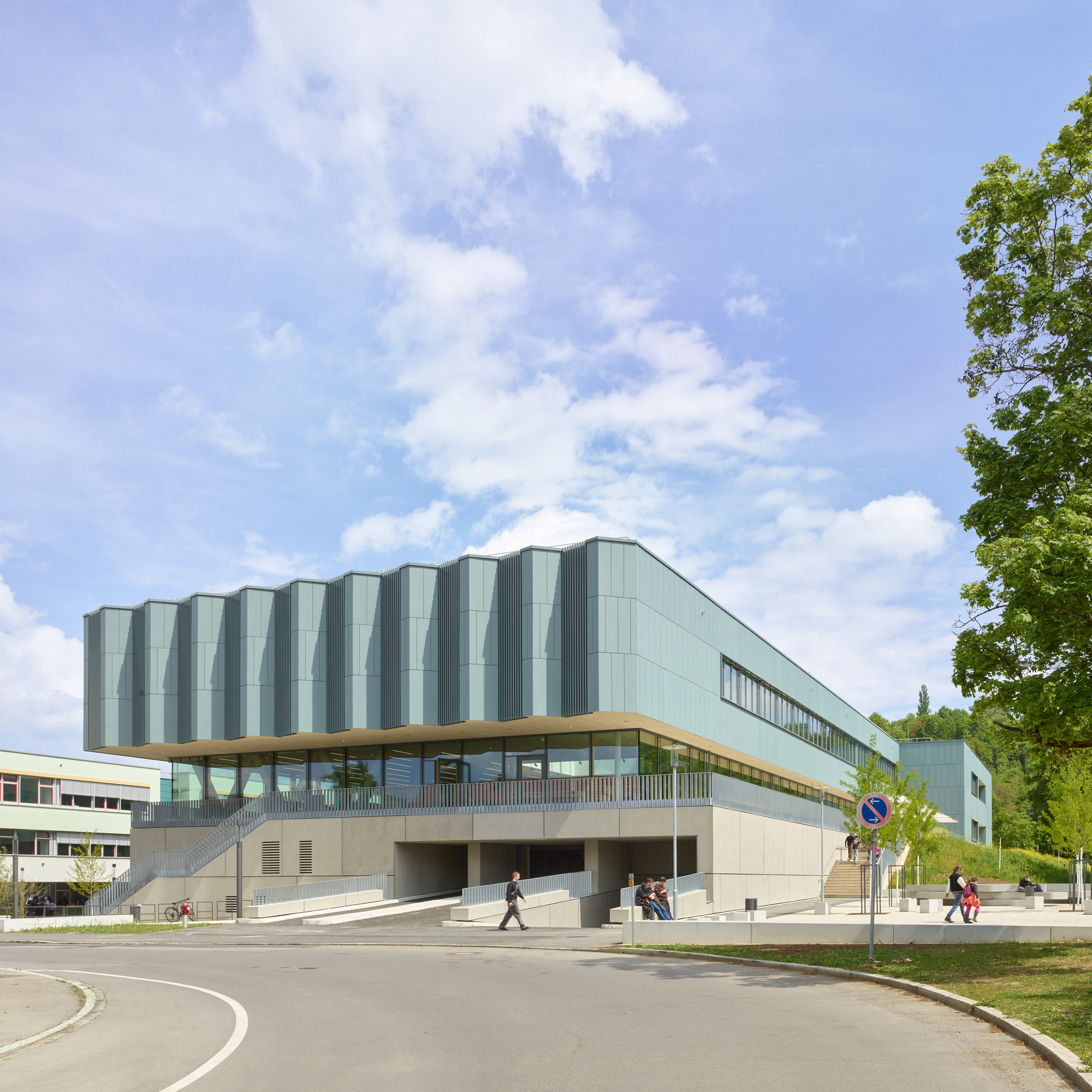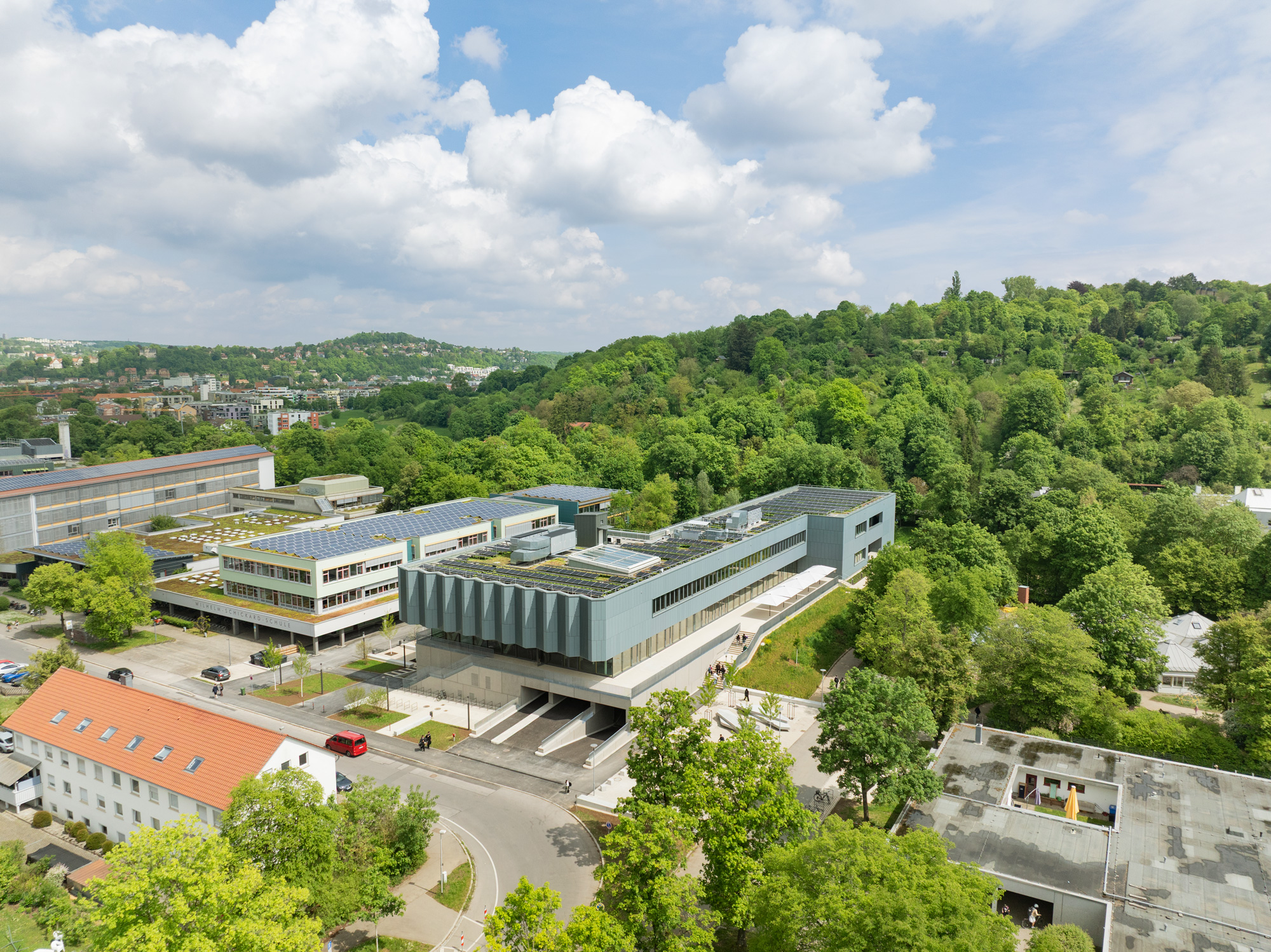

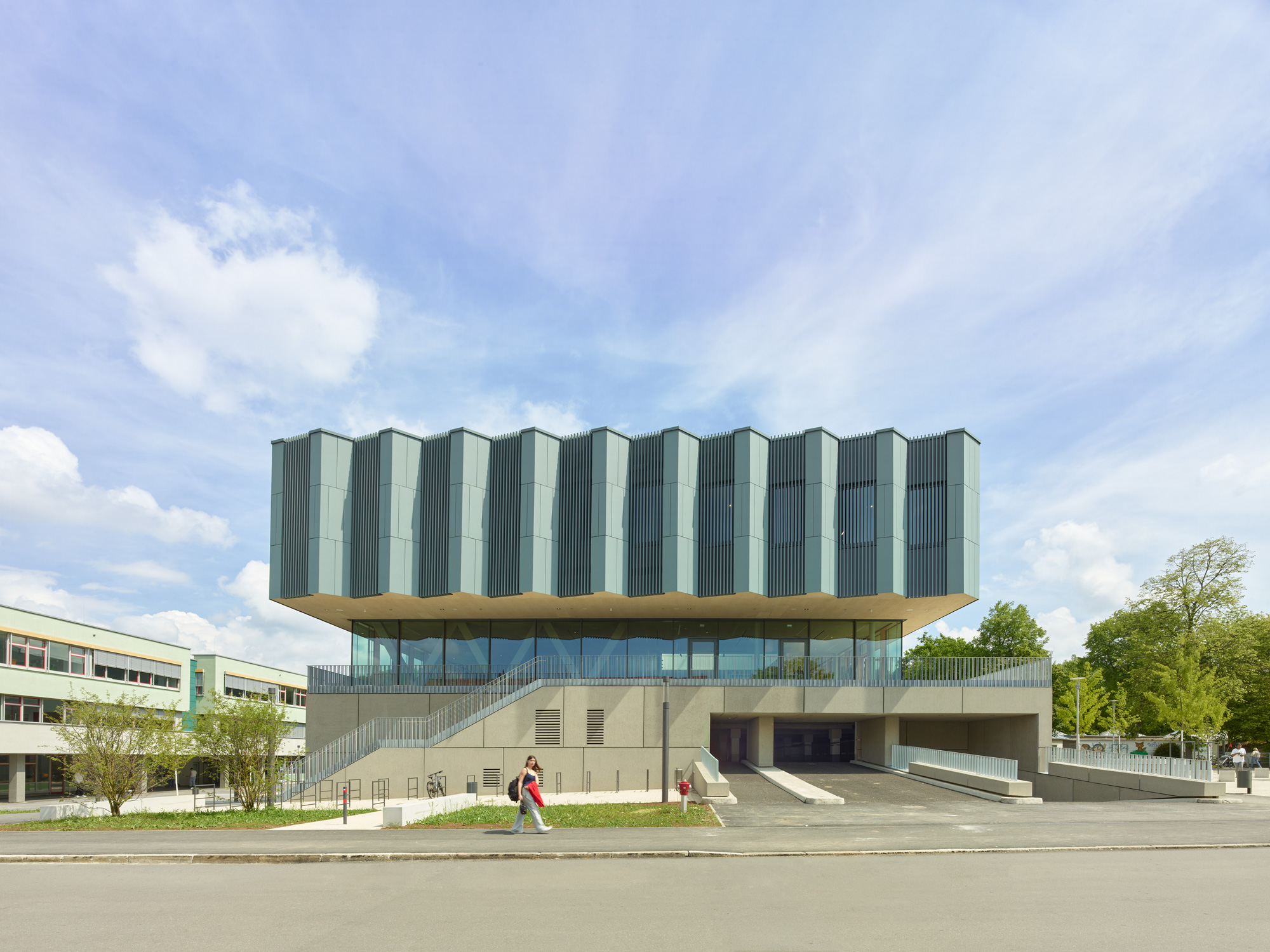
The new campus building for the Tübingen Vocational Schools makes transformation tangible as architecture. Where a two-storey car park, partly embedded in the ground, once defined the space along Primus-Truber-Straße, an elongated new building now stretches between the school buildings, the street and the banks of the small river Steinlach. Working with the existing structure, we have created a new link between the Gewerbliche Schule Tübingen, the Wilhelm-Schickard-Schule and the Mathilde-Weber-Schule. The result is a shared building for around 5,200 students, accommodating a cafeteria, media library, flexible teaching spaces and learning areas.
For many years, the vocational school campus in Tübingen-Derendingen was characterised by functional, stand-alone elements: three vocational schools, an existing multi-storey car park, various access roads, the Feuerhägle sports hall, a nursery, a youth centre and the green riverside landscape of the Steinlach. What was missing was a place capable of bringing these neighbouring facilities together and giving the campus a shared identity.
A campus finds its centre
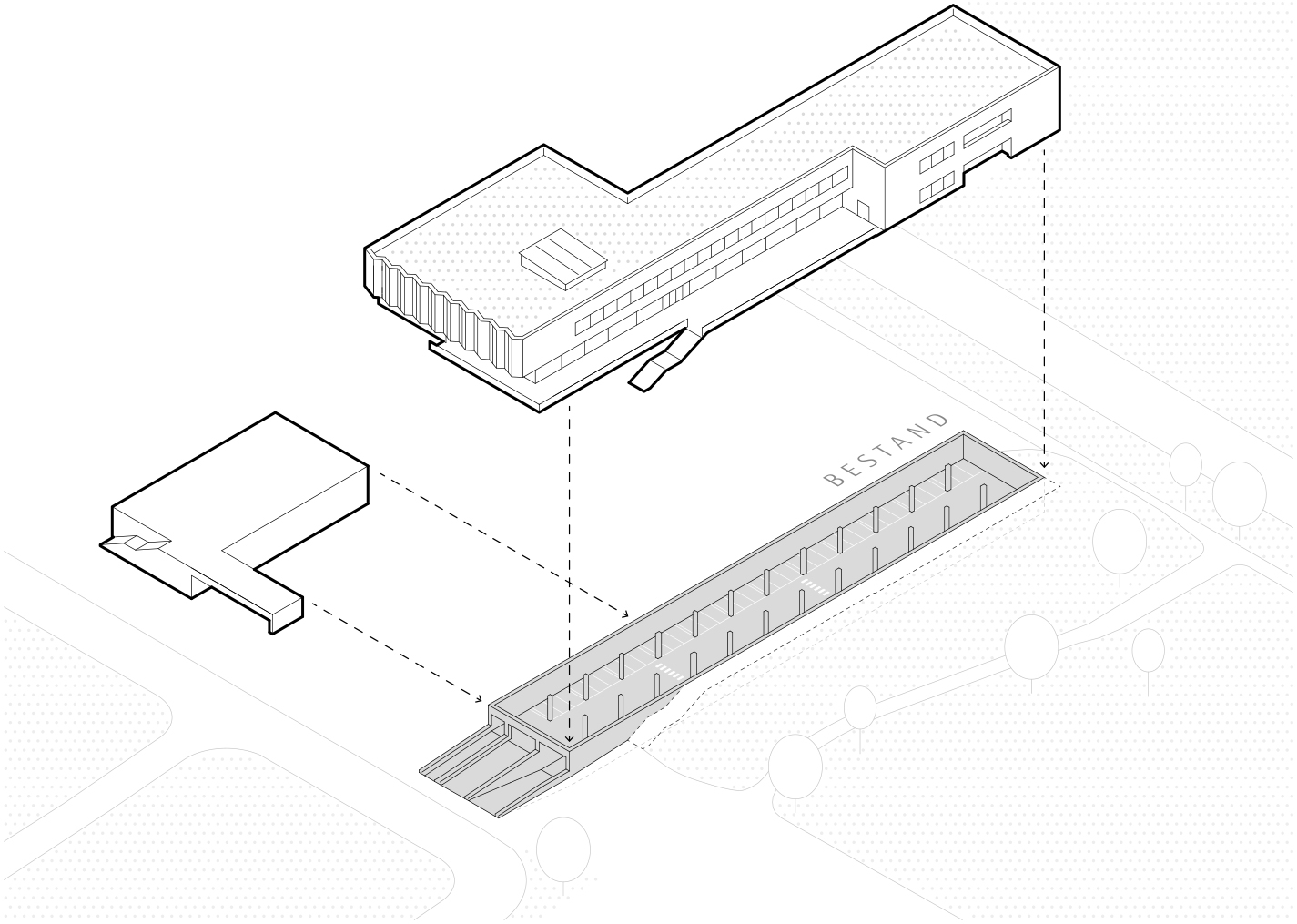
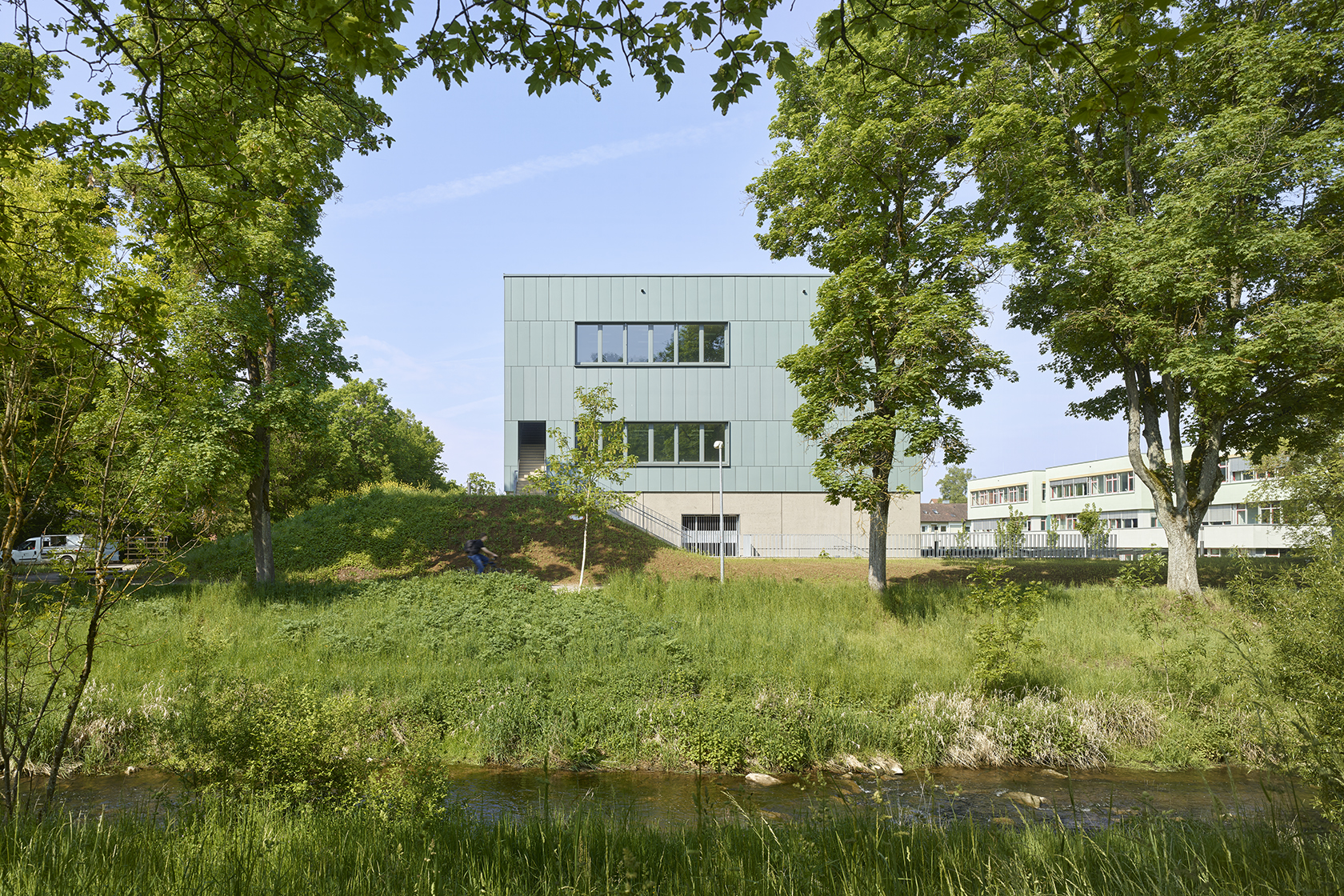
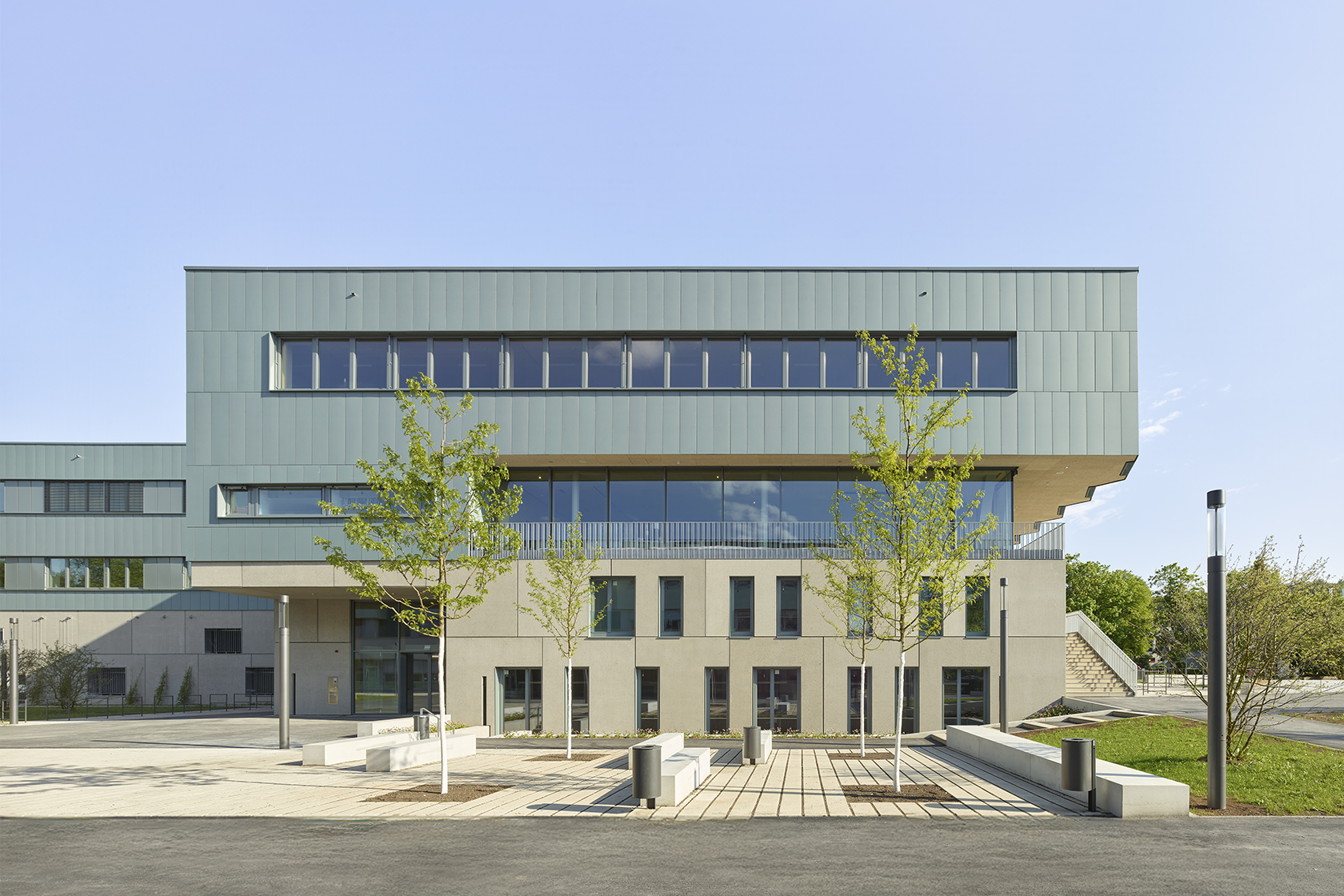
The new building brings a clear spatial order to what had previously been a disparate collection of functions. Extending along the length of the underground car park, it incorporates the existing infrastructure and transforms it into a public educational facility. The building defines outdoor space and creates generous open areas that form a lively centre for the three schools. An elevated terrace links Primus-Truber-Straße with the riverside landscape of the Steinlach. With spacious external staircases leading up from the north and south, the cafeteria terrace becomes a shared point of arrival while separating pedestrian movement from traffic entering and leaving the underground car park.
Building on what exists as a design principle
The multi-storey car park, dating from the early 1970s, was retained as a valuable structural resource and became the starting point for the design concept developed during the invited competition in 2018. Originally engineered to support a landscaped earth covering, its structure offered sufficient load-bearing capacity to accommodate the new building above. At the same time, the existing structural grid, ceiling heights and load paths defined the framework for the new structure. In response, we designed the first new storey above the car park – the level containing the cafeteria and classrooms – as a reinforced concrete structure capable of spanning the large communal spaces while transferring loads into the existing building. By retaining the car park, around 2,000 cubic metres of concrete were reused, preserving a substantial amount of embodied carbon.
Above this base, the cafeteria level becomes the building’s structural threshold. It translates the existing parking grid into the new programme and forms the supporting platform for the lightweight timber structure above. This layered construction expresses the building’s underlying logic: the robust existing structure supports the new public functions, while the timber storeys accommodate the learning spaces and lend the elongated volume a lighter appearance.
At one end of the building, a new volume also completes the plinth level of the two-storey car park, accommodating service, technical and school facilities. The intermediate level contains the offices and ancillary spaces of the cafeteria, together with IT and server rooms. At ground level are a student workspace, a seminar room, sanitary facilities and the delivery area. In this way, the existing infrastructure is spatially extended while being fully integrated into the everyday life of the new campus.
The campus hub
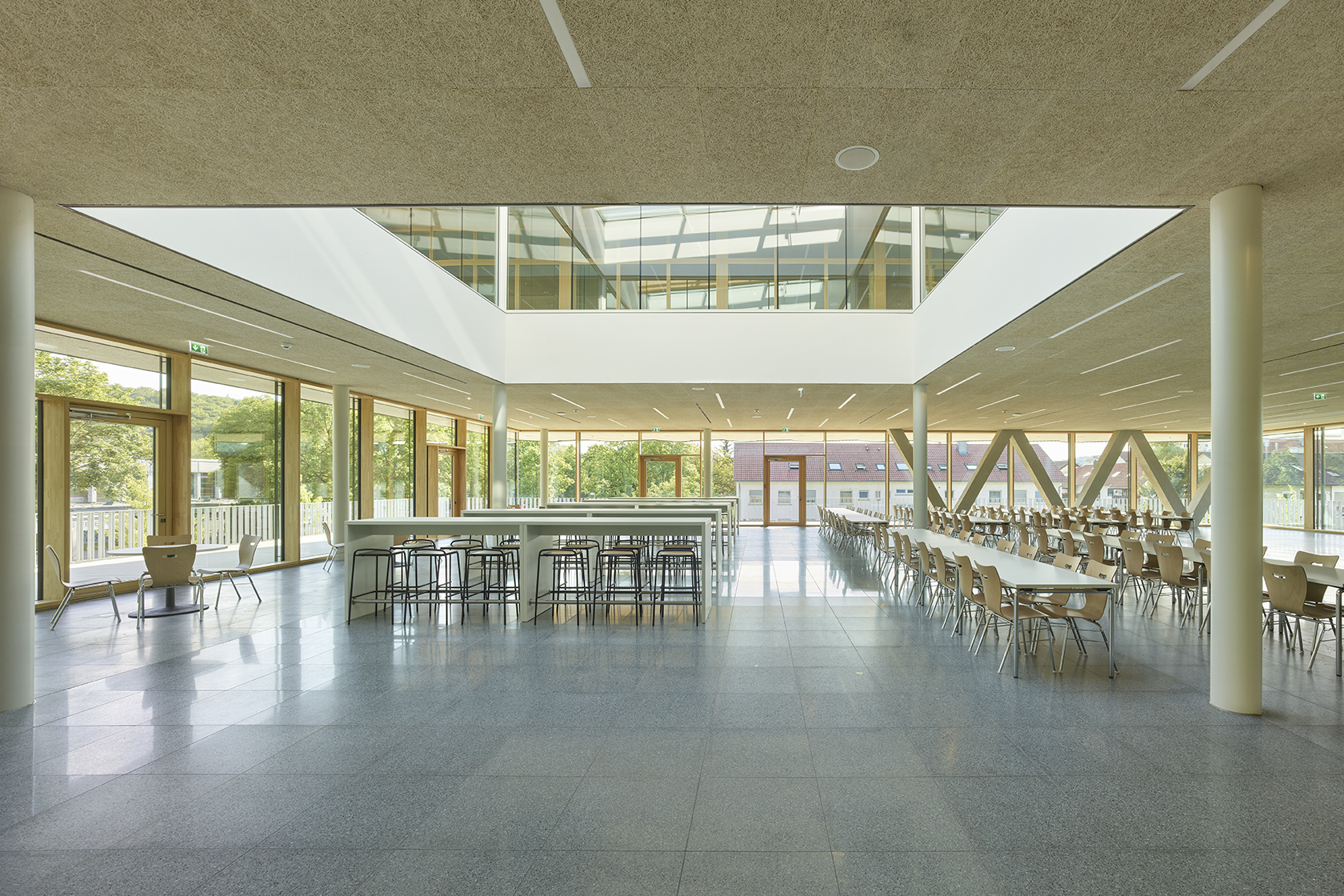
The cafeteria and media library form the social heart of the new campus building. Located on the elevated terrace level, the cafeteria opens onto the terrace and surrounding landscape through full-height glazing. Its generous sense of space is created by the expansive open floor plan, a continuous window strip allowing daylighting and the exposed structural frame. Slender circular columns and V-shaped inclined supports along the western façade establish the rhythm of the interior while making the structural achievement of building above the existing car park immediately legible.
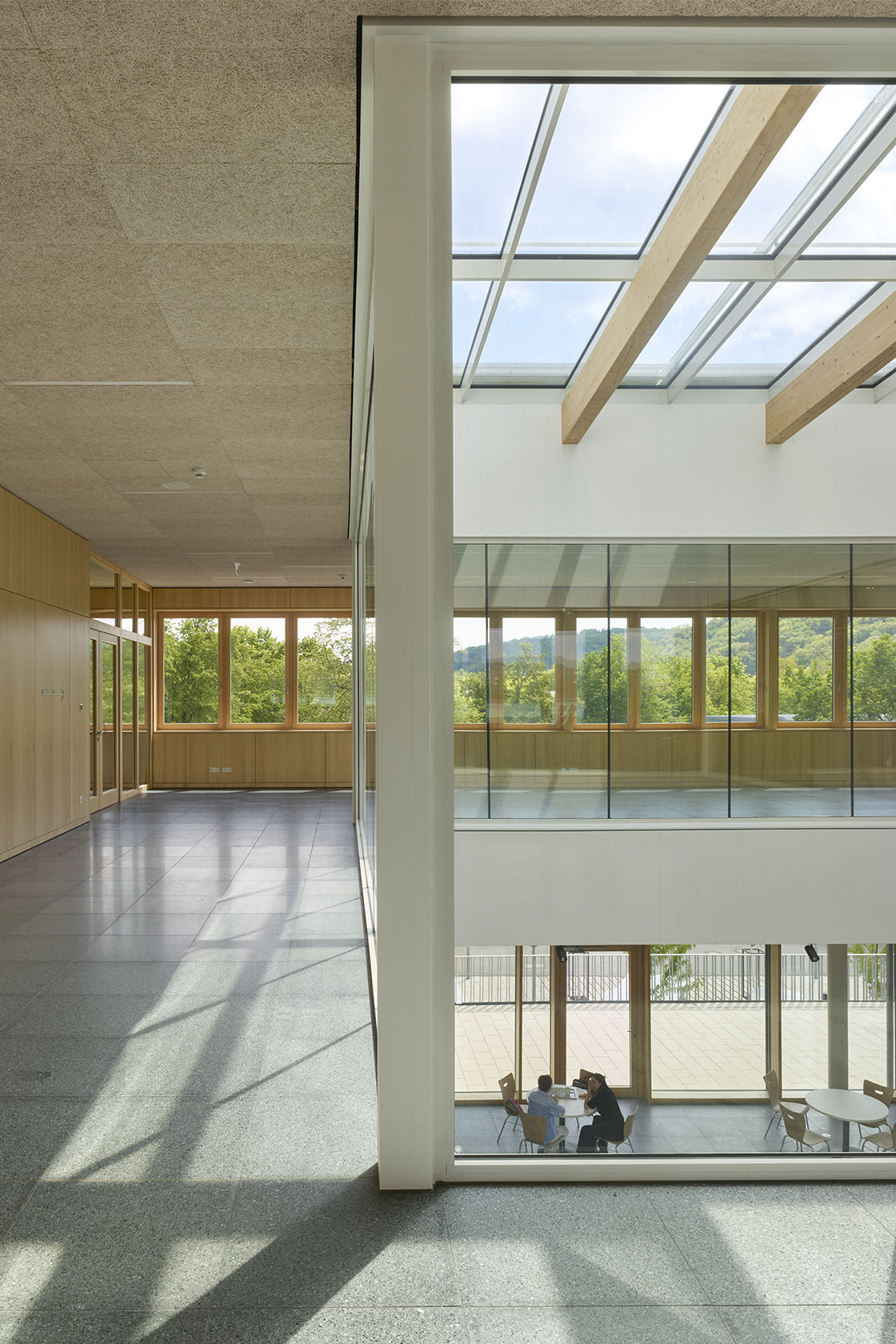
At its centre, a glazed atrium opens the cafeteria to the media library above. Glazed openings and rooflights bring additional daylight deep into the building while creating visual connections between the two levels. Long tables, informal groups of tables along the façade and higher counter-height seating divide the large space into distinct zones without compromising its open character.
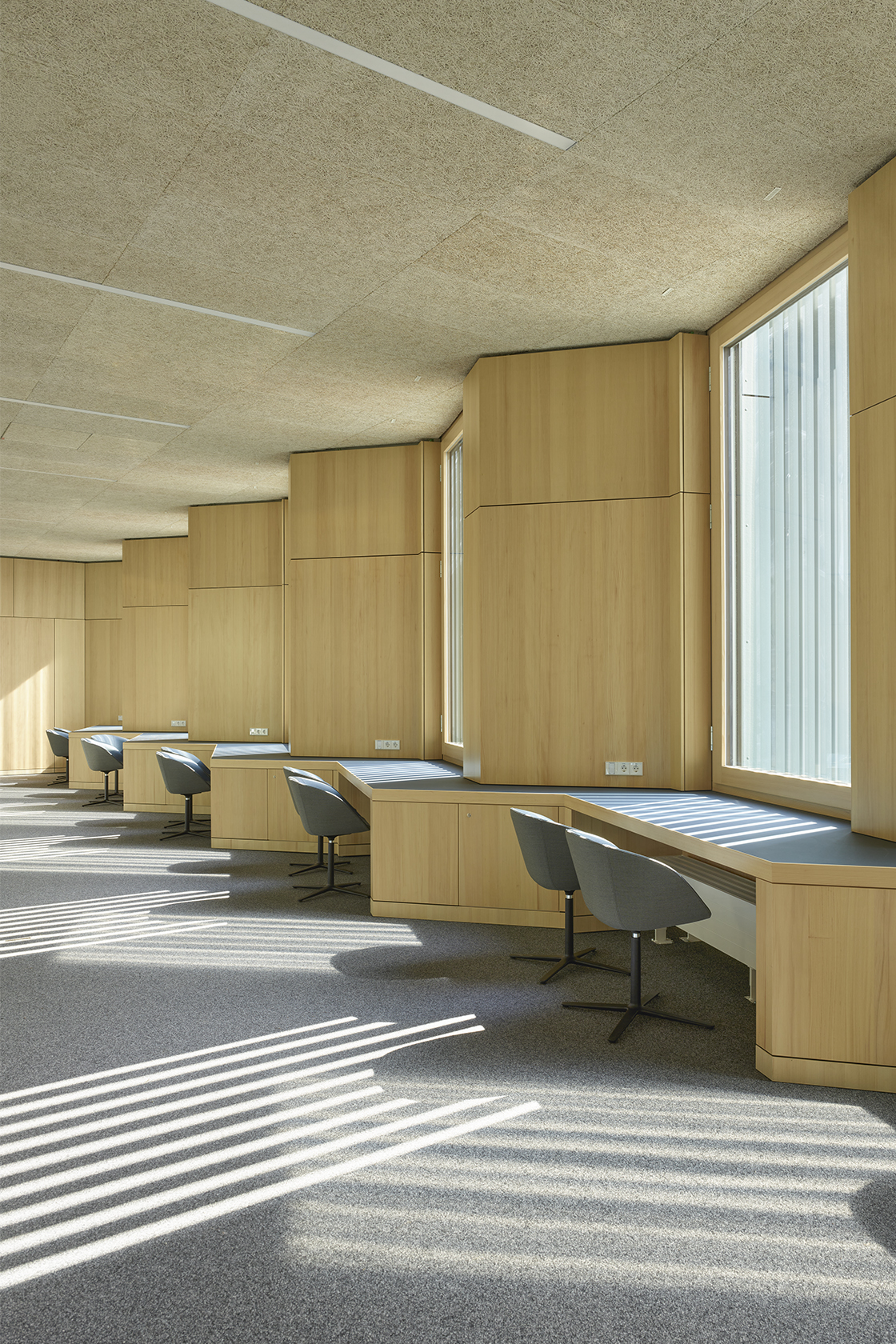
Above, the media library forms the building’s prominent upper section. Supported by staff from the district media centre, it complements the cafeteria as a quiet place for research, study and focused work within the everyday life of the campus. Shelving, a centrally positioned service desk and long seating niches along the façade give the light-filled space both a clear sense of order and an inviting atmosphere.
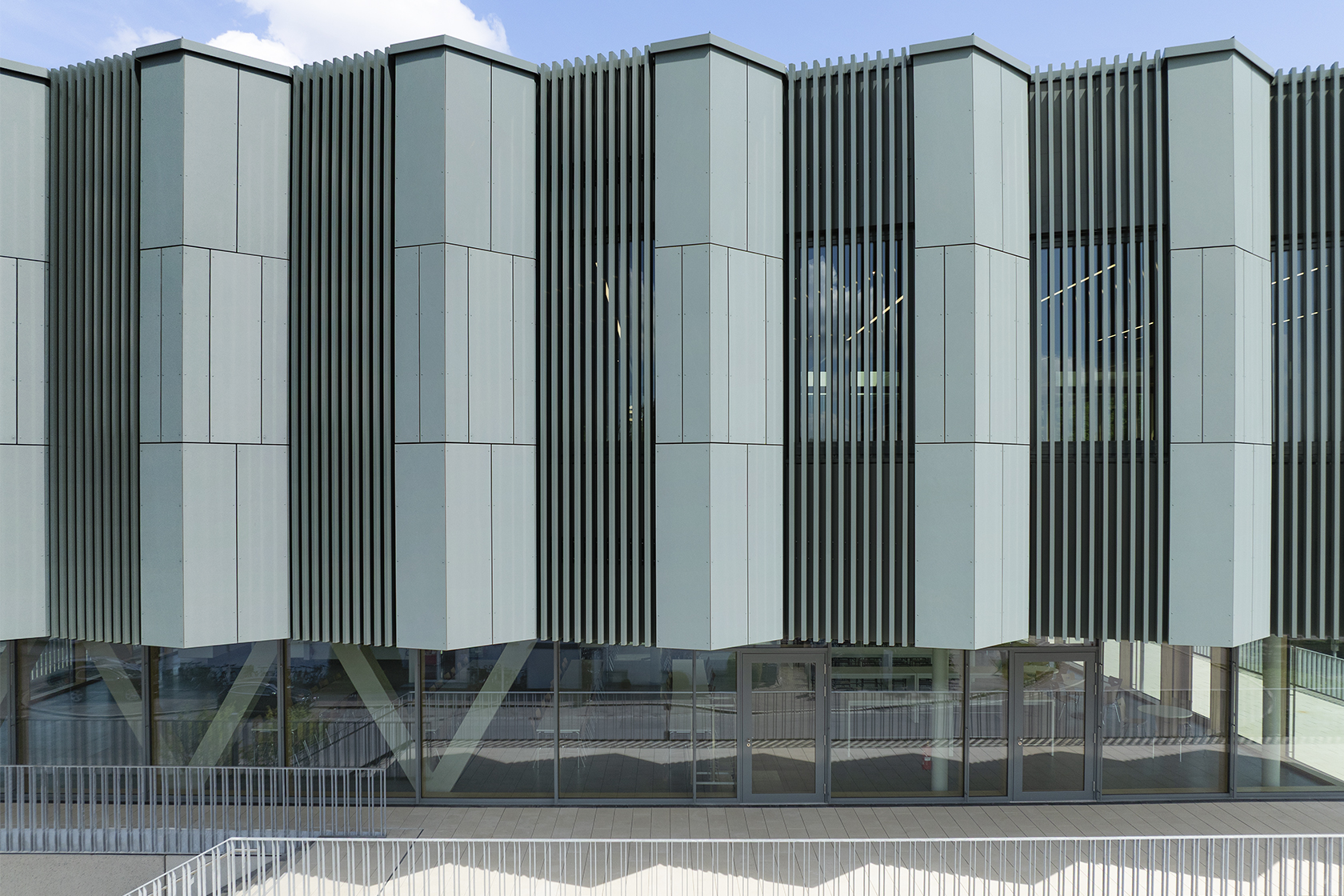
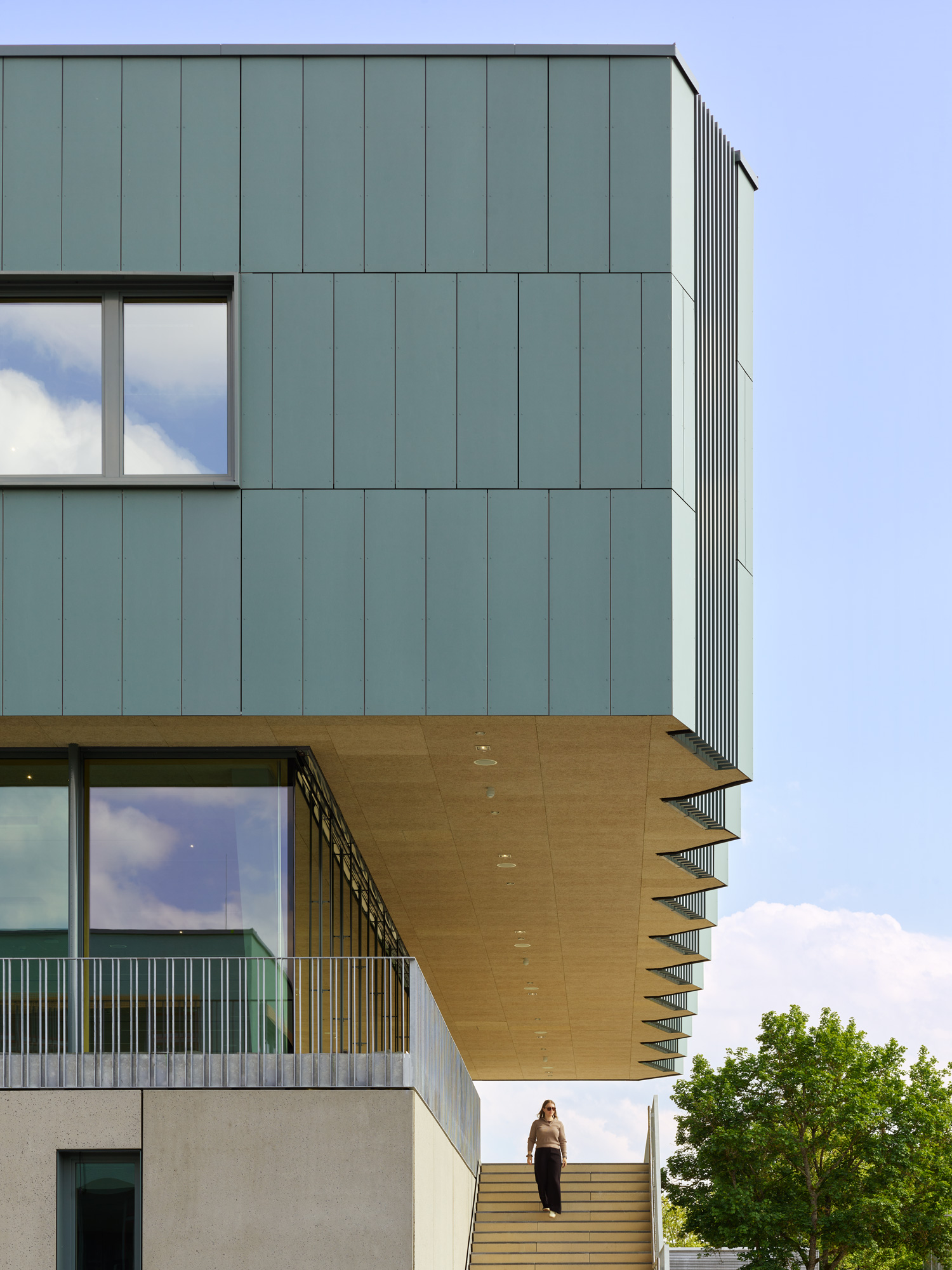
A defining feature of the building’s external appearance is the folded façade of the media library. Blue-green fibre cement panels wrap the upper storeys in a calm envelope. At the narrow end, this composition becomes more finely articulated, creating a subtle, layered profile. The façade lends the building scale and depth, filters daylight and is visible inside as a pattern of light and shadow and around the media library’s seating niches.
A learning wing along the car park
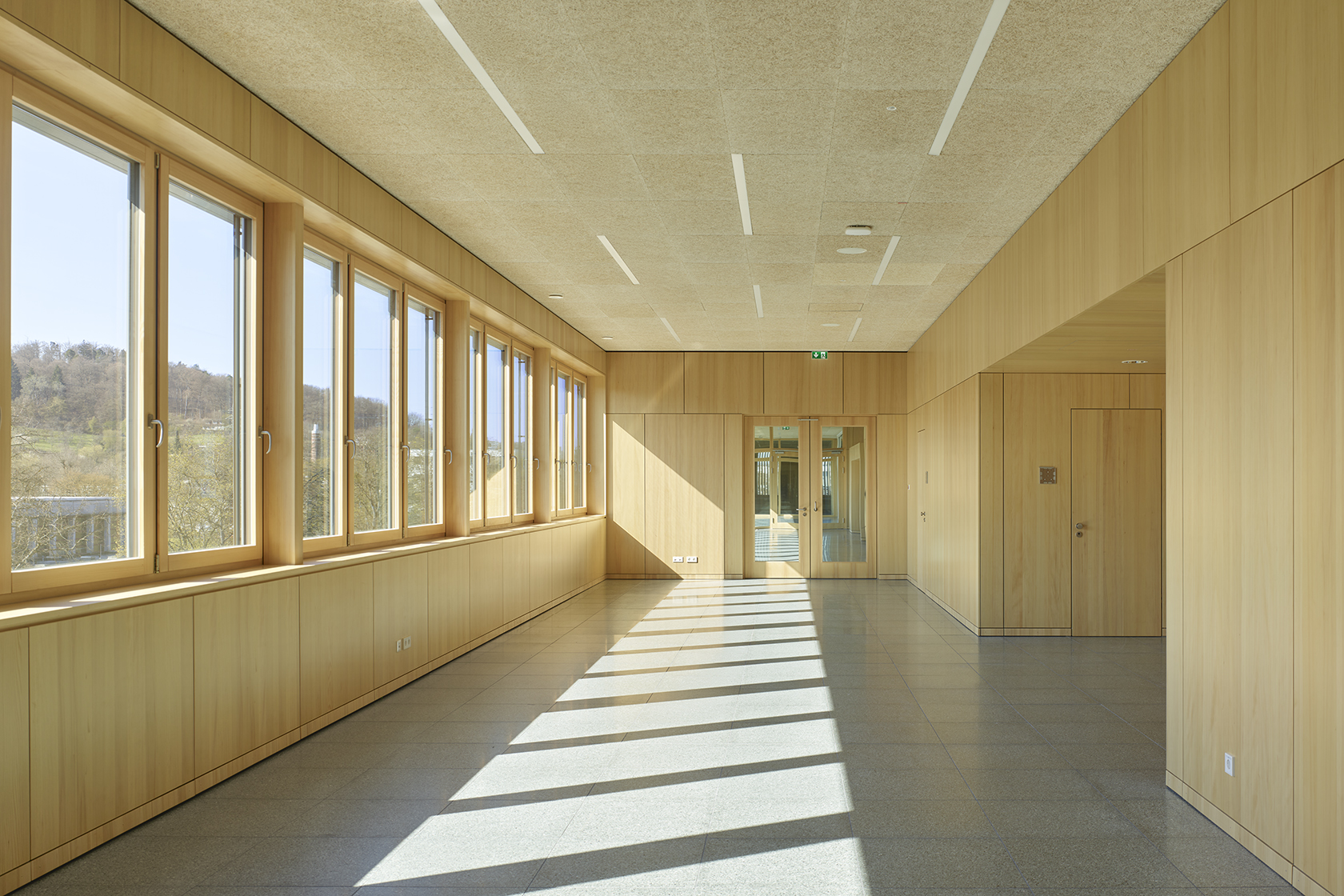
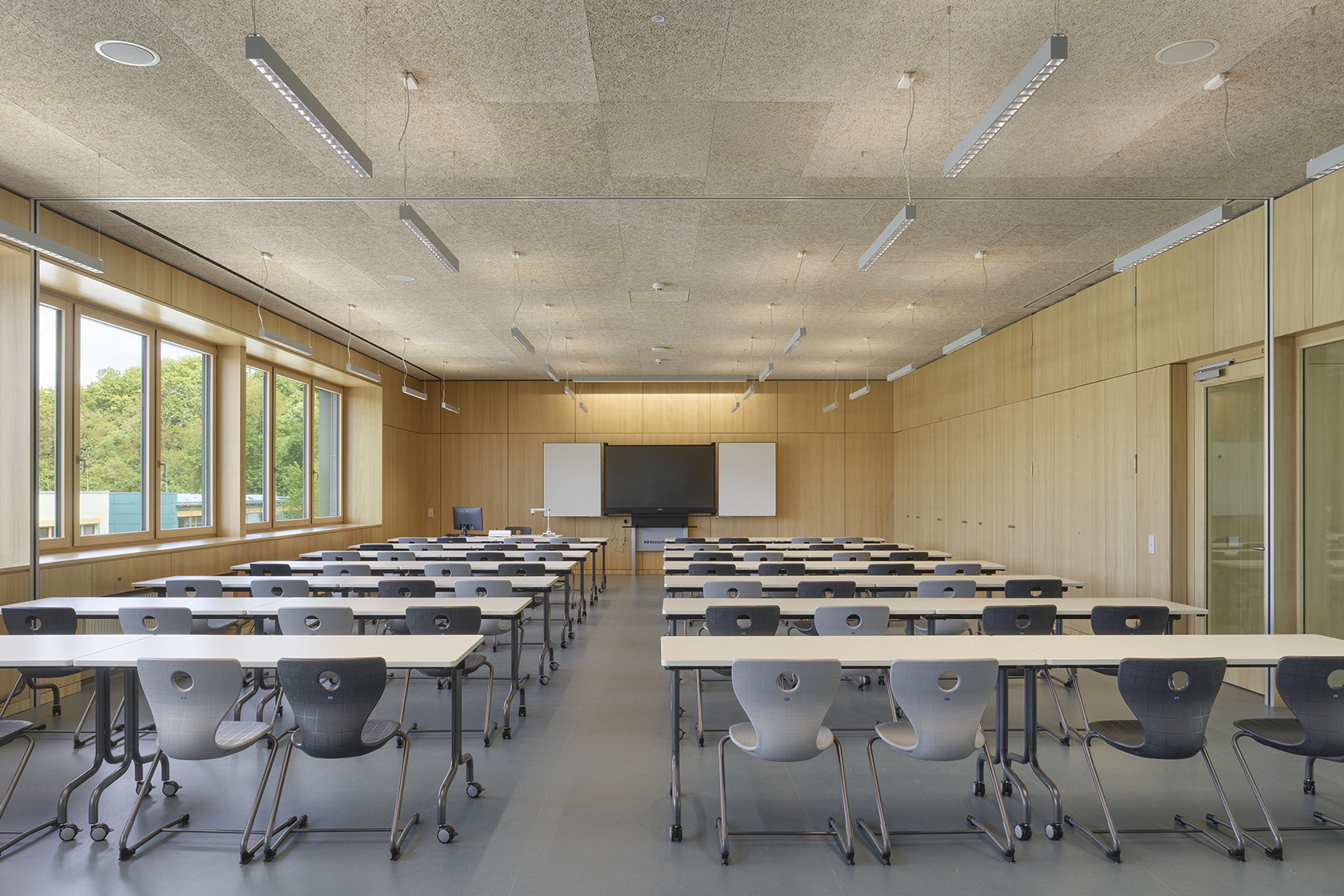
From the building’s head, the learning wing extends eastwards along the full length of the existing car park. Teaching rooms, learning hubs, open-plan study areas and ancillary spaces are arranged on two floors along a central corridor. On both levels, student support services and staff offices complement the teaching areas, providing easily accessible points of contact throughout the school day. The spatial quality is defined by the clear linear organisation, outward views and the open study areas along the southern façade. The new addition supports the daily activities of all three schools through short distances and flexibly usable spaces.
Standing the test of everyday use
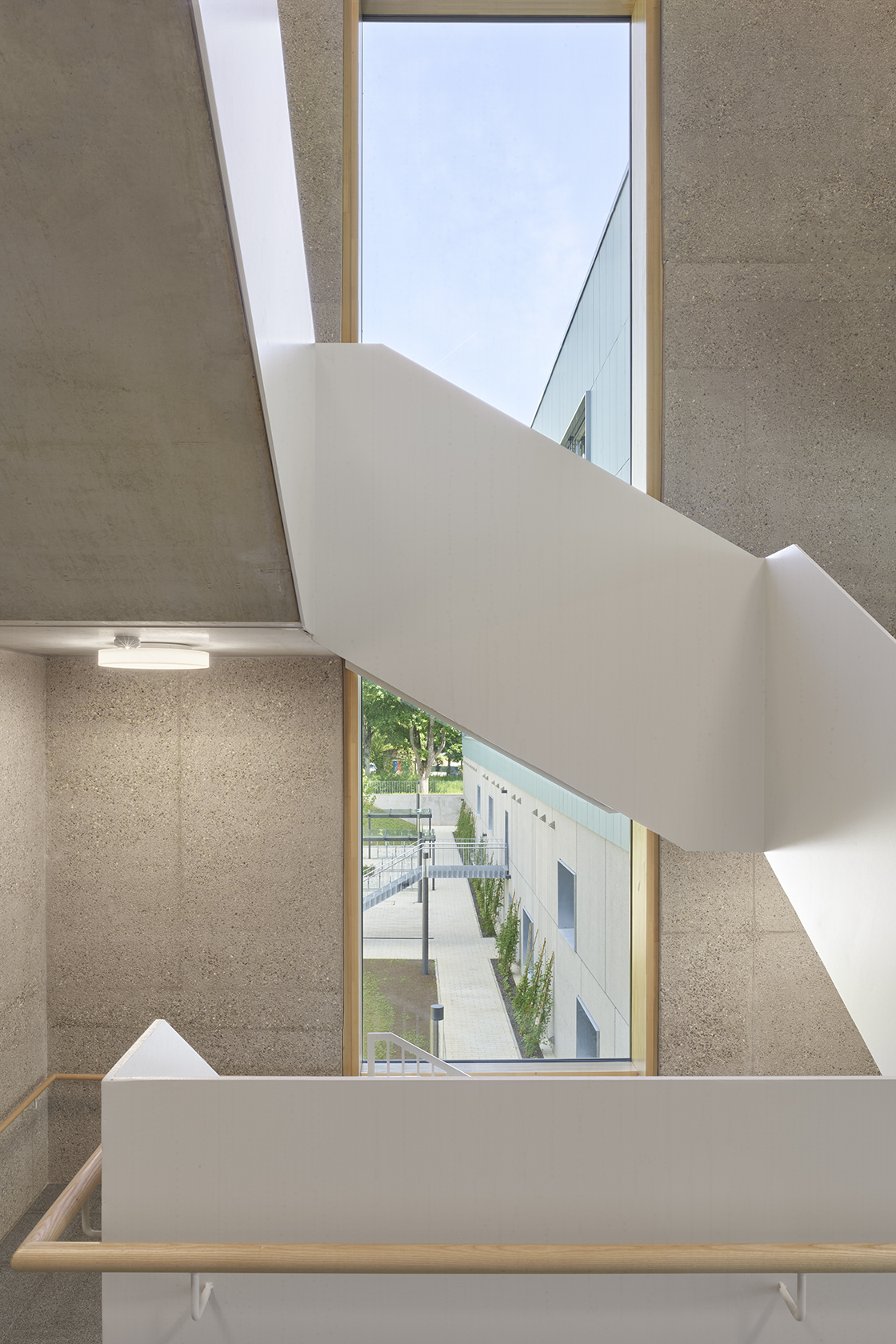
The choice of materials combines robustness with a warm atmosphere. Sandblasted concrete surfaces define the two lower levels both inside and out, from the staircases to the precast concrete façade elements. Above, blue-green fibre cement panels, colour-matched to the existing school buildings, wrap the upper storeys in a finely articulated envelope. Inside, silver fir is used for windows, doors, built-in furniture, wall cladding and seating niches. Reconstituted stone provides durability in heavily used areas, while glazing creates visual connections.
These decisions reflect the project as a collaborative achievement between client and architects. Alongside environmental considerations, sustainability is understood here in terms of retaining existing structures, making thoughtful material choices, ensuring graceful ageing and creating a building that performs well in everyday use. Together with the client, we assessed the materials, maintenance requirements, ease of upkeep and ageing characteristics from the very beginning. The key factor was that the surfaces would withstand the demands of daily school life, retain their quality over the long term and give the building a lasting and appropriate presence.